

Orders from the White House express enhanced enforcement for deporting persons illegally in America – especially those committing felonies while in the states. However, the presidential decree trickling down the line to enactment in court processes has not only been slow and uncertain, it has also been erratically meted out even in the same county.
A tale of two courts
Although there are two side-by-side district courts that predominately oversee all Jefferson County felony cases, defendants in the U.S. illegally are handled quite different from one another.
As heard in Jefferson County Judge John Stevens’ Criminal District Court, the elected official is hesitant to release persons admittedly in the country illegally. Among the cases heard before the court are sexual assaults, violent crime, DWIs when it’s the third or more, and an array of weapons accusations. Feb. 4, the court was to hear the case of a defendant in the states illegally. Before allowing any plea deal to commence, Stevens instructed the court personnel and prosecutor to research best practices under the current administration.
“There’s a new sheriff in town,” Stevens said, adding that he was not inclined to release any person in the U.S. illegally from prosecution or hold while there were still citizenship concerns on the table. “Things are different.”
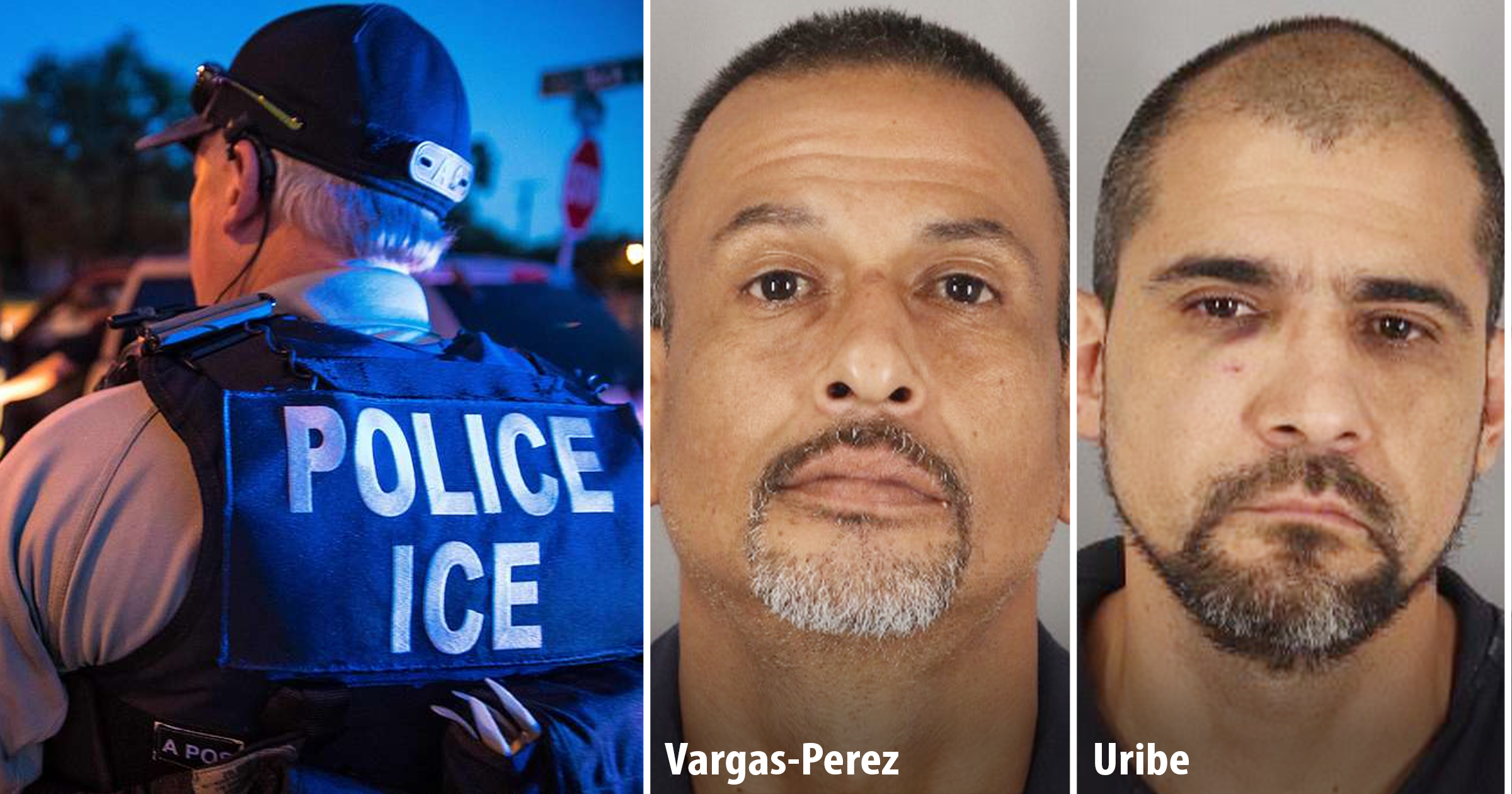
Next door in Judge Raquel West’s 252nd District Court on Feb. 4, Jose David Vargas-Perez, 40, an undocumented immigrant living in Hamshire, stood for sentencing on a felony stalking charge stemming from a series of escalating threats and violent actions against his estranged wife. Despite Vargas-Perez’s guilty plea and pattern of behavior leading up to the hearing, the defendant was given 10 years of deferred probation with fines waived.
During the proceedings, Vargas-Perez’s family pleaded for his release, citing financial hardship, while the prosecution warned the court of the significant danger the admitted stalker posed to his wife. Prosecutorial warnings fell on deaf ears.
The charges against Vargas-Perez arose from months of increasingly dangerous incidents, according to the charging instrument for his arrest:
• June 1, 2024 – Vargas-Perez was arrested for violating a criminal trespass warning while also wanted for making terroristic threats against his estranged wife.
• June 23, 2024 – Vargas-Perez’s spouse, getting a ride home from work, was confronted when Vargas-Perez blocked the vehicle she was in, banged on the doors and windows, forcibly removed her, threw her into his truck, locked the doors and sped away.
• July 7, 2024 – Vargas-Perez showed up at his wife’s residence, banging on the doors and windows, demanding she come outside.
• July 17, 2024 – Believing her son had arrived to pick her up for work, Vargas-Perez’s estranged wife got into a truck only to find Vargas-Perez behind the wheel. He locked the doors, drove at high speed and threatened to kill them both, telling her that if he couldn’t have her, no one could.
• July 23, 2024 – Vargas-Perez’s spouse reported that he was parked across the street from her workplace, watching her. When she left with her manager, Vargas-Perez chased them down the highway until she reached her home.
• July 24, 2024 – While on the phone with the Jefferson County District Attorney’s Office, the victim received a series of threatening messages from Vargas-Perez, including: “I’m tired of you making me look like a fool, I am done playing. The next time I see you, I am going to beat you to death.” That day alone, she received 60 messages. Vargas-Perez also warned his victim that, if she called the police, things would get worse.
Vargas-Perez was offered a plea deal by Jefferson County District Attorney prosecutor Ashley Molfino, allowing the accused to plead guilty to stalking with a sentencing cap of eight years, leaving the final decision to Judge West.
Defense attorney Charles Rojas argued that this was Vargas-Perez’s “first contact with the criminal system” and that his actions were simply the result of emotions getting the best of him. He asked for probation.
The estranged wife, along with two of their teenage daughters, spoke in his defense, acting as translators and asking for leniency. Although the victim had alerted authorities time and time again to alleged threatening conduct, the spouse now claimed that Vargas-Perez had changed since being in jail since August, and that their family, including their four children, was struggling financially without his income.
Molfino, however, stated for the record that, while she respected his wife and their children, she “could not support probation,” because the file information made her very scared for the victim.
West ultimately sentenced Vargas-Perez to 10 years’ deferred probation, requiring him to complete the Batterers Intervention and Prevention Program (BIPP) and forbidding him from living with or harassing his family. However, she allowed “positive communication” over the phone, stating:
“If y’all are going to try to work on things to get back together, I will allow that – but only on the phone. If you’re harassing her again, texting her 60 times a day, or putting her or your daughters in fear, you’re going to prison.”
A GPS monitoring device was also ordered, which West said provided “a little more comfort” in ensuring that Vargas-Perez would stay away from his spouse’s home and workplace.
After sentencing, it was revealed that Vargas-Perez did, in fact, possess an ICE hold, meaning that once his local charges were resolved, Immigration and Customs Enforcement (ICE) had flagged him for potential deportation. He was transferred to ICE custody Feb. 7.
ICE holds melt in two days’ time
Feb. 11, Alejandro Chavez Uribe, a 42-year-old Beaumont resident without U.S. citizenship, appeared before West for sentencing. Uribe had pleaded guilty to aggravated assault with a deadly weapon, a second-degree felony, after admitting to stabbing a man following a verbal and physical altercation on May 3, 2024. Uribe told police that, after the confrontation, he returned to his vehicle, retrieved a box cutter and cut the victim twice.
During the court proceedings, it was revealed that Uribe had previously been deported for residing in the U.S. illegally. Still, Uribe was offered the opportunity to defray further criminal confinement as West approved a plea agreement presented by prosecutor Phillip Smith, ordering a $1,000 fine and granting Uribe a five-year deferred adjudicated probation, which effectively prevents a verdict from being entered.
West said this would be “an excellent opportunity” for Uribe to avoid a felony on his record if he complies with the terms of his probation. Regarding Uribe’s immigration status, West added, “Whatever happens, happens in federal court.”
Although held at the Jefferson County jail as of press time, Uribe is under an immigration hold and will potentially be transferred to ICE custody within 48 hours – or released.
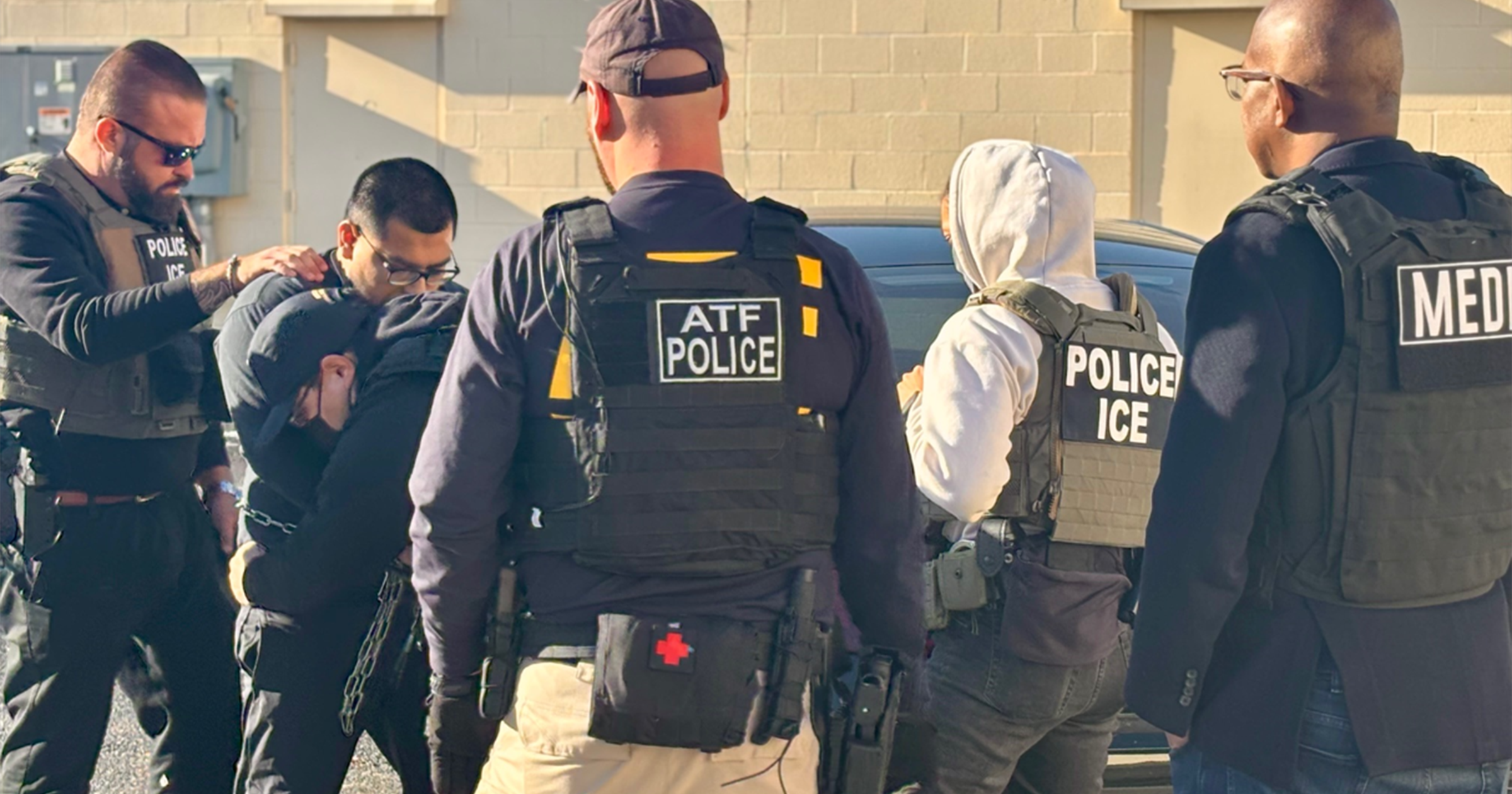
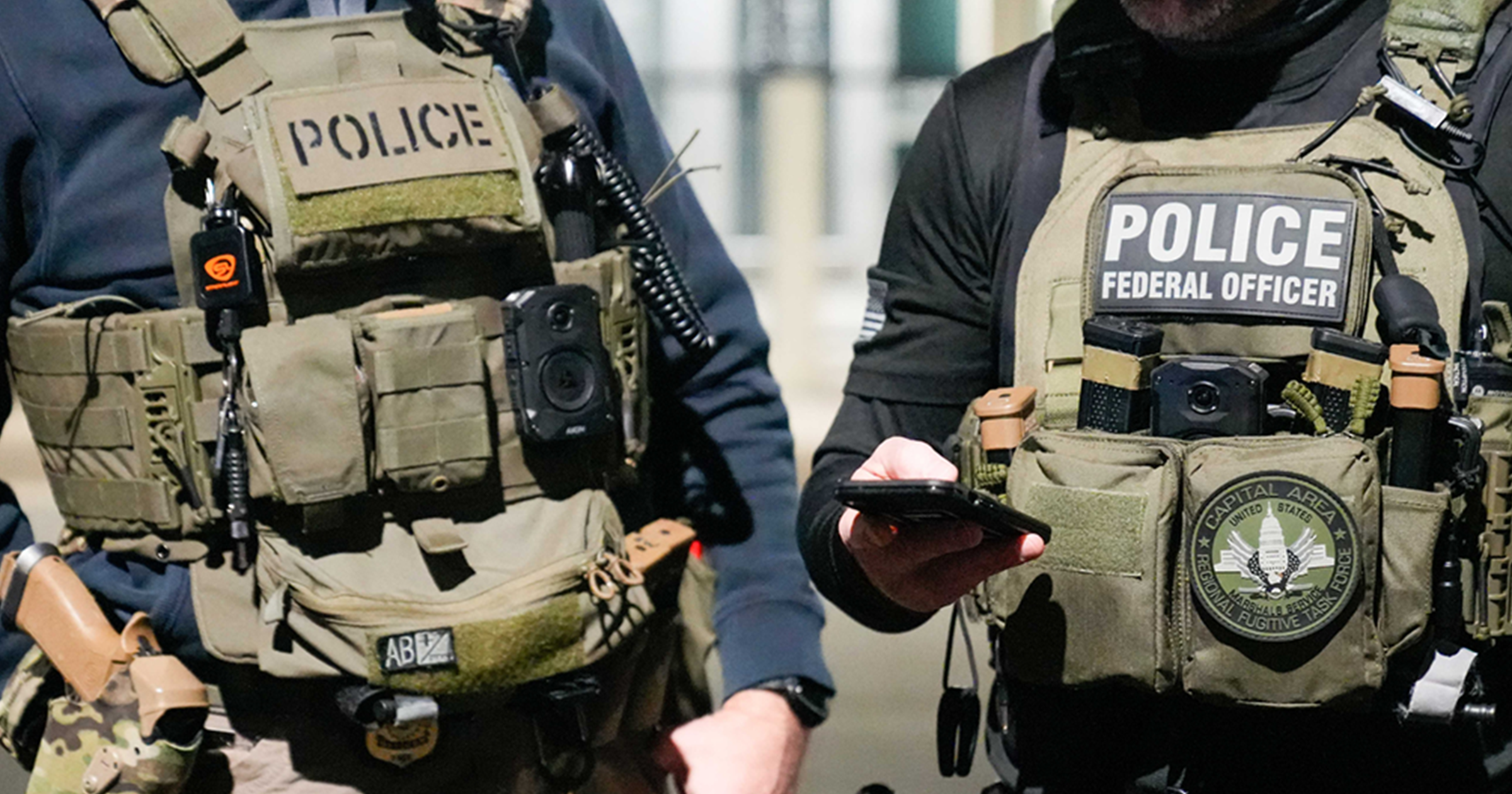
U.S. Immigration and Customs Enforcement (ICE) reports working closely with local, state and federal law enforcement agencies “to protect the public from national security, public safety and border security threats.”
In some cases, ICE’s federal law enforcement officers lodge immigration detainers against potentially dangerous undocumented immigrants arrested by another law enforcement agency or are removable from the United States. In other cases, not so much.
According to the federal agency, ICE detainers are sought “after officers or agents establish probable cause to believe that an alien is removable – typically after a court has convicted them of one or more crimes and when the alien poses a public safety or national security threat.” Often, ICE issues detainers against undocumented immigrants convicted of burglaries and robberies, kidnapping, homicide, sexual assault, weapons offenses, drug trafficking and human trafficking. When defendants are placed on deferred probation, however, there is no “conviction.”
Also, as established by law, ICE “holds” are limited to request that the local enforcement agency maintain custody of the unlawful resident for a period not to exceed 48 hours beyond when he or she would otherwise have been released to provide ICE time to assume custody. The immigration detainer is only a request and does not impose any obligations on the local entity, the agency defined.
If ICE does not assume custody after 48 hours, the local agency is required to release the individual.
.

.
.
.