

Since the modern Olympics first established the marathon concept in 1896, athletes have been called to take on the challenge of endurance running at local, national and global levels. Some, like Southeast Texas runner Haley Williams, take the challenge to “ultra” proportions.
Williams, frequently on the marathon circuit alongside husband Brent, recently achieved her goal of running a 100-mile ultra-marathon — for the second year in a row.
In addition to the length, ultra-marathons are different from the standard 26.4-mile marathon in many ways. Smooth roads are typically switched to trails, hills, and deserts. Distances vary, and multi-day events like the Marathon Des Sables can reach 250km. Common ultra-marathon race distances include 50k, 50 miles, 100k, and 100 miles.
Williams said she started running at 22-years old, then participated in her first 5k marathon at 27.
“It felt so good. Putting that bib on gets you immediately pumped up,” she said. “I did several 5ks, and then I said, ‘I'll do a 10k,’ then I did a half marathon. I’ve run 18 marathons now and I've crossed over to ultra-marathons.”
For her first ultra-marathon, Williams had to drop out around the 60-mile mark. She returned; and Williams celebrated completing her first ultra-marathon last year. This year, Williams completed the trek in 29 hours and 18 minutes.
A major element of any marathon, especially an ultra-marathon, requires training, Williams said. According to the veteran runner, she extensively trained approximately 14 weeks pre-ultra-marathon, compared to six weeks for a 5k.
“The hardest thing is the training,” Williams emphasized. “It’s basically a full-time job, and you have to accommodate. (For ultra-marathons), you can't run on a treadmill, because you have to train outside. You have to basically run two to three hours every single day, and on Saturday and Sundays, you need to run for about five to six hours.
“Just during the training, you lose toenails, you get blisters. But (after) being on your feet and running for 30 hours, your body hurts…things you didn't even know would hurt. It's a lot on your family, it's a lot on your body and it’s a lot on your finances, because this race is $300 and you have to stay in a hotel. Plus, your nutrition is very important.”
Support enterprises for the running industry typically make small packets, between 80 to 200 calories of things runners can digest easily, Williams said. The niche products are literal lifesavers for long-distance runs, she added.
“They'll have different carb levels, depending on what you’re doing,” Williams said. “And they have high sodium, because you're sweating a lot, you’ll need to replenish that. You definitely want to intake a lot of sodium, as well as electrolytes and the calories you need.”
Currently, Williams works as the manager for On The Run, which sells several food brands and running equipment frequently recognized on the track.
“All the things that you would do in your normal daily routine, that's what you're doing during the race. However, you don't sit down, you just keep running,” she said. “Some miles might be a quick pace, some you walk, so it's going to be a little bit slower. And some of my miles during those 100 were 27 minutes, because that accounted for me going to the restroom and changing my socks.
“The clock doesn't stop ticking until the race is over.”
For ultra-marathons, Williams shared, runners are known to push through without sleeping, as there is risk of going over time.
Williams said she plans to run another ultra-marathon in August at Leadville, Colorado, touted as the city with the highest elevated level terrain in the United States.
“That's going to be challenging as far as the altitude goes … because we don't have mountains to train in here,” she said, adding that she is training for hills at a parking garage. According to her, every run and every runner has its own journey — and that’s fine: “Run your mile, focus on your mile. However you have to get through it is how you get through it.”
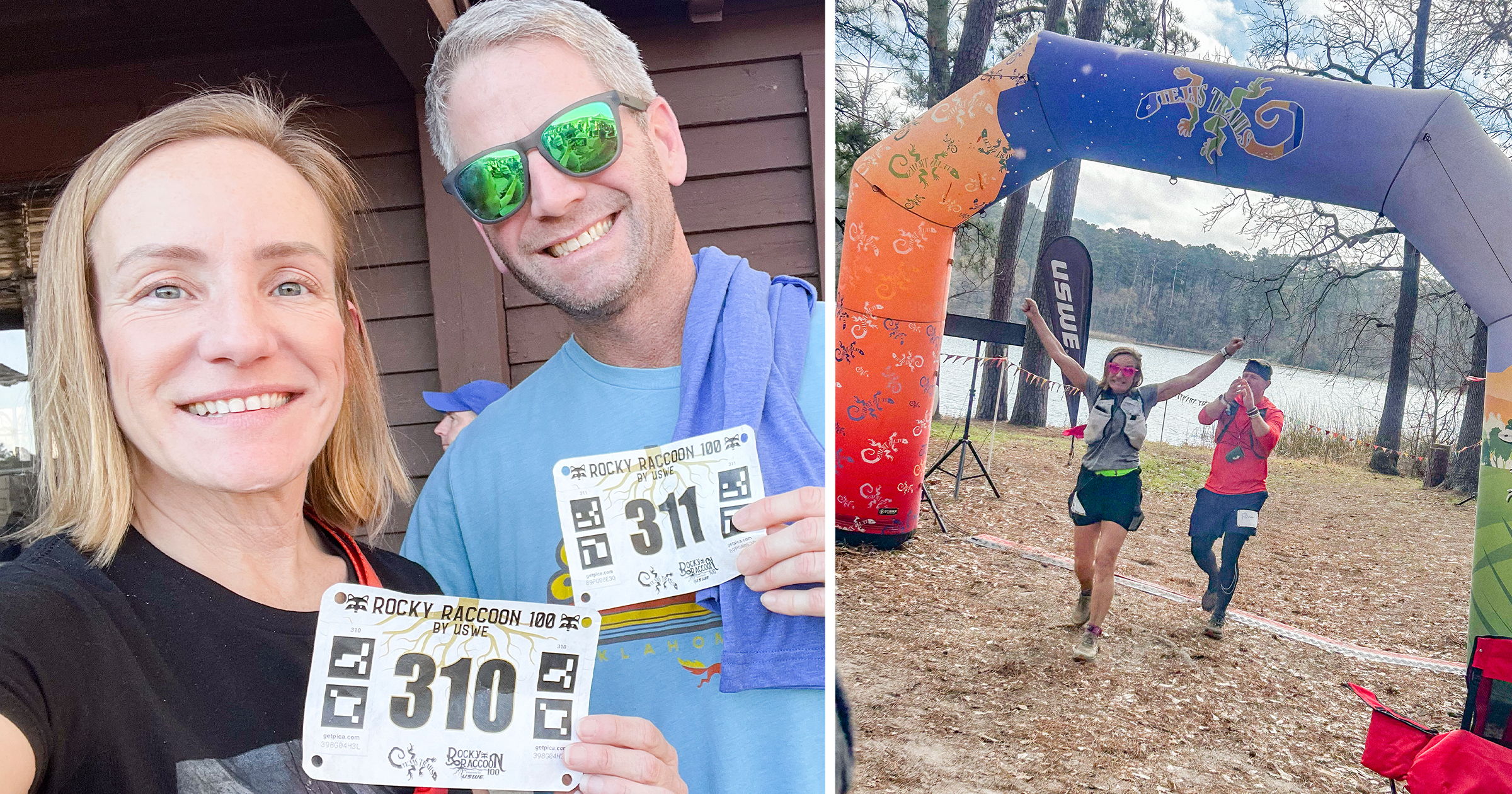
Haley and Brent Williams