

As if six years wasn’t long enough for a minor victim to await justice for a crime reported in 2019, a once admitted sexual predator who entered into a plea deal to bypass a human trafficking trial Nov. 17, 2025, entered court for sentencing Jan. 21 and instead claimed ignorance of his admitted guilt. The one-time admitted child sex predator was then left to continue walking the streets of Southeast Texas while he again awaits a trial date to be set.
The reported victim of child sex trafficking, previously informed that the case was finally over in 2025, is now being asked to again get ready for trial. In the meantime, court officials are concerned that the child’s former abuser has been pressuring the victim to not cooperate with prosecution efforts.
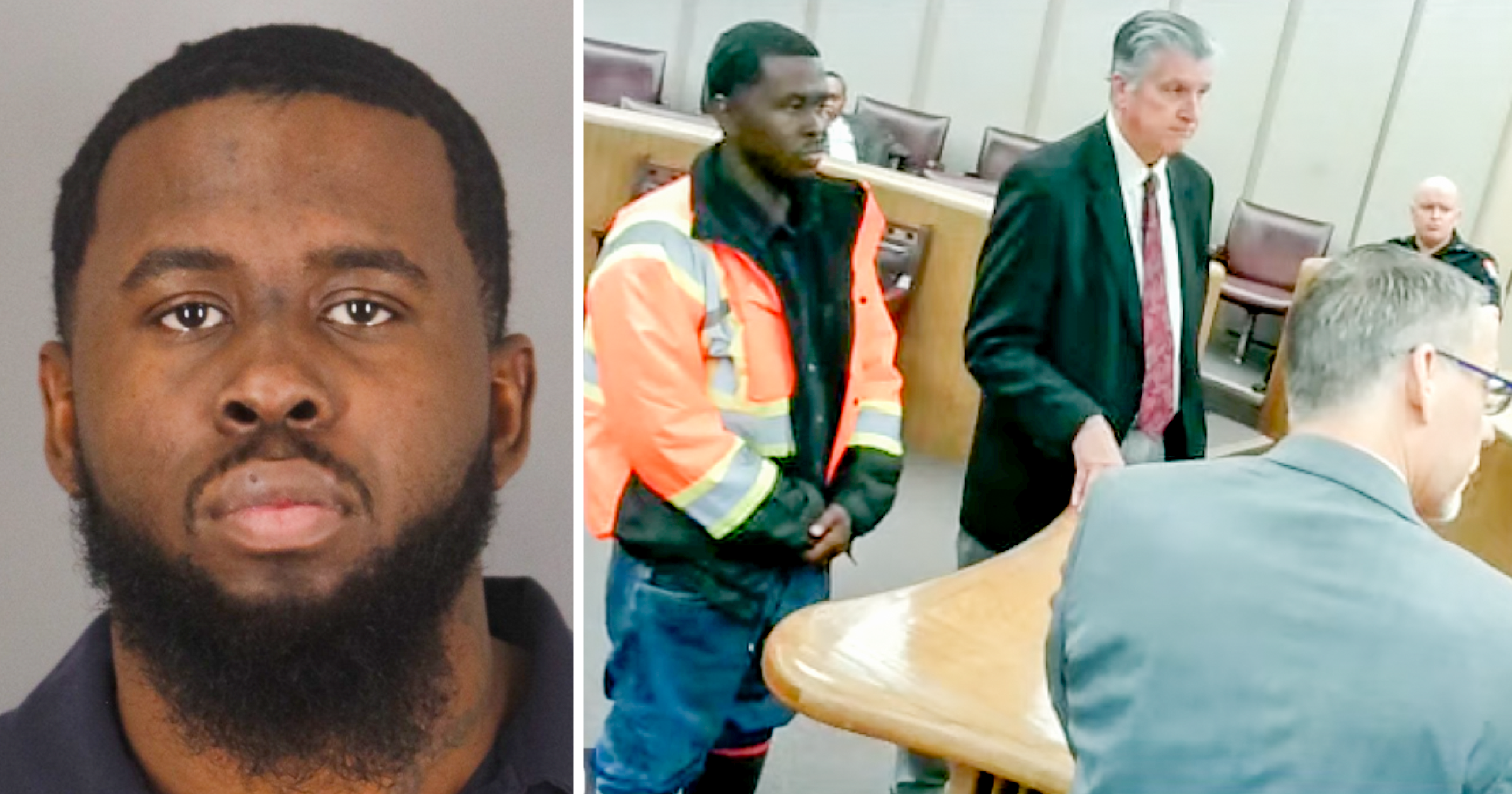
Lance Shane Dixon, a 32-year-old alleged Beaumont pimp who goes by the name “King D” was indicted for trafficking of persons Feb. 1, 2023, nearly three years ago, for continuous trafficking of a person, a minor, dating back to 2019. In November 2025, on the day of trial, Dixon appeared before Jefferson County Criminal District Court Judge John Stevens and instead accepted a plea deal with prosecutors. In exchange for a guilty plea of continuous sexual abuse of a child, the state would drop the charge of human trafficking and agree to prison sentencing not to exceed 10 years.
Before Dixon would be sentenced, the admitted felon would undergo a pre-sentence investigative review with the probation department to allow the court more information to assign appropriate penalty. But, by the time Dixon returned for sentencing Jan. 21, he told the judge that he did not understand the 2025 plea of guilt he was signing.
“Were you lying when you pleaded guilty to me or did you lie to the pre-sentence officer when you said nothing happened? Which one? You can’t say both of them. Which one?” Stevens asked Dixon.
“I didn’t even know what I was signing,” Dixon said before answering affirmatively that he does speak and read English.
Baffled, Stevens tried to understand how the defendant could possibly not have understood the plea arrangement given the long, slow, methodical way guilty pleas are explained when accepted.
“You pleaded guilty under oath. We went over it slowly and methodically. That sounds like perjury,” said Stevens.
Further, Stevens remarked, “I want to know if he had any contact with the victim and [then] we will have a bond hearing immediately…we’re going to find out if there’s some sinister motive behind all of this.”
The victim — a 16-year-old child who said she was being made to engage in sexual conduct in exchange for money on Dixon’s command, is the same child whose photos Beaumont Police Department (BPD) Detective Charles Duchamp found nude images of listed online by Dixon in attempt to allow other predators to sexually assault the young girl. At the time of the initial report in 2019, the child’s mother contacted BPD indicating that her daughter had called asking for money and was with a pimp known as “King D” and five other girls in a local hotel.
BPD was initially unable to locate Dixon/ “King D” or the victim. Once BPD made contact with the victim, she told officers she met Dixon in October 2019 and he was posting ads of the minor online and setting up dates for sexual services, incidents she described as “too many to count,” according to the probable cause affidavit that led to Dixon’s indictment. Duchamp reported that Dixon continued to promote nude images of the underage girl after the victim was no longer with him, ultimately determining that Dixon trafficked a child more than 30 days, engaging in conduct multiple times against the victim that constitutes the offense.
Dixon left Stevens court Jan. 21 with an order for a GPS monitor to keep track of his whereabouts, but free to walk the streets of Beaumont without restriction or even a warning to the public by way of the sex offender registry, just as he has for the last several years.
On the lesser charge, Dixon faced a minimum of two years and a cap of 10 years of prison time, according to the state’s plea deal. Dixon will now face the original trafficking charge at trial and, should he be found guilty, will face imprisonment of 25 to 99 years. House Bill 2306, signed in August 2025, eliminated parole as an option for a defendant convicted of trafficking a person in all cases when the victim is a child or disabled individual.
In a conversation following Dixon’s hearing, Stevens told The Examiner he ordered the case fast-tracked and anticipated Dixon to be back on the trial docket in two weeks.
“This case has been languishing too long,” said Stevens.
The term human trafficking often brings to mind scenes from movies or stories from distant parts of the world, but public records, court filings, and the lived experiences of local young women reveal that Southeast Texas has become a significant hub in this multi-billion-dollar criminal enterprise.
This week, the pleas of a desperate mother reached The Examiner news desk after she reportedly exhausted every avenue available to her in an effort to help her daughter. A beautiful young woman, a Tulane University graduate with a touted talented and creative mind, is now unmedicated and suffering from mental illness and finds herself behind the bars of the Jefferson County jail, the one place her mother feels is safe. At least she’s separated from her pimp while behind jail bars.
“For how long?” though, is the question her mother stays awake wondering every night. Three years ago, “Mom” told The Examiner, she picked her daughter up from a random house in Louisiana — a trap house, she described.
From that point forward, Mom’s daughter, a diagnosed paranoid schizophrenic, has been unmedicated, on and off of drugs, branded, reportedly sexually assaulted, in and out of jail and mental health facilities, and back and forth with “Virgil” – the man from the trap house, who reportedly brought Mom’s baby girl to Beaumont. Mom said her daughter claims Virgil as her husband, and his friends are her boyfriends. Mom last spoke to her daughter in late October 2025, before she was released from a mental health facility and turned over to a homeless shelter. Soon thereafter, Mom received a call from a private security officer in Pearland, who said he found her daughter behind a store, pantsless, in pain, and claiming to have just been assaulted.
“All the signs are there that she is being trafficked,” Mom said. “I’ve written letters to judges, called the jail, every mental health facility, done everything I know to do to try to get her some help.”
The daughter’s court-appointed attorney told The Examiner she reached out to the Human Trafficking Hotline and was told they couldn’t help, that the woman needed to call the police and that the hotline purpose was only for keeping statistics and such.
The Examiner reached out to the National Human Trafficking Hotline directly, receiving more questions than answers initially, but later learning that they do not directly provide assistance in helping a victim escape or reach a shelter/hospital. Unlike the name “hotline” may lead one to believe, the service providers simply gather data from callers and give phone numbers to reach other people that can help — a federally funded Google, of sorts.
Ultimately, The Examiner was provided two resources by the National Human Trafficking Hotline: The Children’s Center, Inc (844) 763-8861 — a number not in service, (409) 370-7926 – a number that goes unanswered despite multiple attempts, and (409) 765-5212 — a number not in service.
Secondly, the newspaper was provided with the contact information for Harvest House Ministry, (409) 790-0798, which confirmed that they are a local resource for trafficking victims but are now going by the new name of Embracing Freedom. Ultimately, The Examiner concluded that those with immediate need of assistance in cases of human trafficking would be better off calling the police or Embracing Freedom, as listed above, unless they are simply wishing to contribute data.
According to state-wide statistics, Texas is consistently ranked among the highest volume of human trafficking cases nationwide. During FY 2024, 2,087 human trafficking arrests were made in Texas; 246 children in Department of Family Protection Services conservatorship were confirmed to have been trafficked that year alone.
While the courts deliberate and defendants maneuver through legal technicalities, victims continue to suffer in silence — often unseen, unheard, and unprotected. In Dixon’s case, a man accused of exploiting a child for profit remains free while the young life he allegedly damaged must carry the consequences forever. Meanwhile, another mother watches her daughter spiral through mental illness, addiction, violence, and homelessness, pleading for intervention that never seems to come.
Human trafficking is not a distant crime. It is happening in Beaumont hotel rooms, on local streets, and revealed in detail inside local courtrooms. Until accountability is swift, resources are accessible, and victim protection becomes a true priority rather than an afterthought, the cycle will continue — predators walking free, families breaking apart, and justice delayed for those who need it most.
The Texas Department of Transportation (TxDOT) has offered advice for Texans to recognize the signs of human trafficking.
“What would happen if we all know the signs of human trafficking and act when we see it? We can work together to give anyone who travels in Texas peace of mind wherever they go,” TxDOT Executive Director Marc Williams said. “We know our transportation system can be a conduit for trafficking, which is why we are providing tips to our employees and Texas drivers on how to spot the signs.”
Human Trafficking Awareness education exposes various types of human trafficking, red flags commonly associated with human trafficking, how transportation is used to aid traffickers, and ways individuals can safely report suspicious activity.
“Red flags” that might indicate labor trafficking or sex trafficking include:
• Worker is not free to leave.
• Worker lives at the business.
• Worker is transported to the location by the owner or manager and all workers arrive and leave at the same time.
• Person seems overly fearful, submissive, tense or paranoid.
• Person is deferring to another person before giving information.
• Person has physical injuries or branding such as name tattoos on face or chest.
Call 911 for emergencies. Or, call Embracing Freedom at (409) 790-0798 for real, local help for victims of human trafficking.
.

A trafficking victim currently sits in a Jefferson County jail; her mother claims it’s better than being with her pimp.

.