

For the Beaumont Police Department (BPD), taking another look at an unsolved homicide isn't always as simple as reopening a file.
Investigators assigned to the department's Crimes Against Persons (CAPERS) Unit are responsible for current homicides and death investigations, while also carrying unsolved cases from years, and sometimes decades, ago. Now, a new partnership with Lamar University’s Criminal Justice program is designed to give investigators additional help in sorting through unresolved cases and identifying opportunities that may have been overlooked.
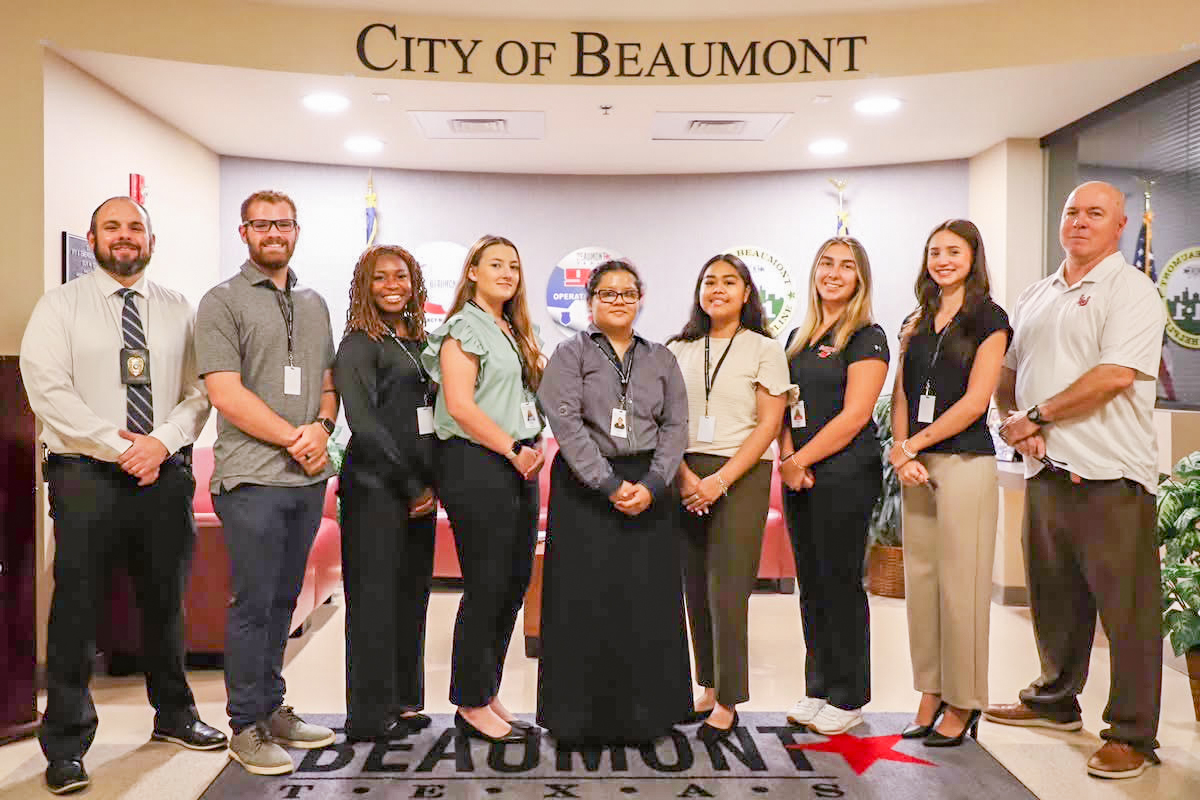
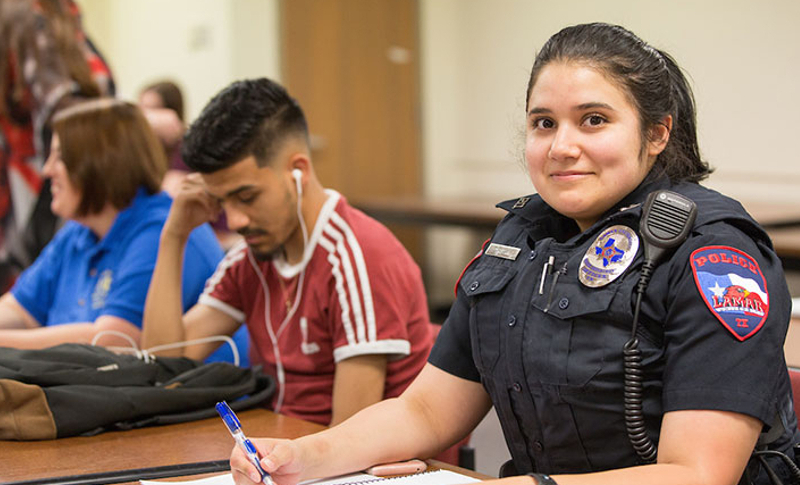
The Cold Case Homicide Internship Program officially began last week, bringing Lamar students into the investigative process under the supervision of Beaumont police investigators and university faculty.
BPD Sergeant Haley Morrow said the program is designed primarily to help investigators organize and modernize unsolved homicide case files, an important first step when detectives inherit investigations that may have originated with officers who have since transferred, been promoted or retired.
“Cold case,” commonly used to reference an unsolved homicide, is typically invoked when investigative leads are believed to have been exhausted and the investigation has stalled. But, according to Morrow, BPD detectives have seen firsthand that a case considered “cold” can heat-up and gain new momentum when investigators take another look.
Advances in forensic science can create opportunities that did not exist when a homicide originally occurred. Witnesses may also provide different or additional information years later.
Before up-to-date possibilities can be explored, however, investigators must first work through what can be an enormous amount of information contained in older case files, Morrow further explained.
The laborious task of re-examining what can be hefty case files is where the Lamar students come in.
Students will work with investigators to organize files and develop chronological timelines, witness grids, and evidence inventories. Students in the Cold Case Homicide Internship Program will then assist with completing what is known as a solvability matrix, a structured review intended to help investigators identify potential investigative opportunities.
The work is not intended to put students in the role of detectives. Rather, the co-eds will serve in an analytical and support capacity, with police supervision and academic oversight throughout the process. After a case has been reviewed, command staff will conduct a final assessment and determine how the department should proceed.
Morrow said the additional manpower could be particularly valuable because investigators must balance older unsolved cases with new investigations that require immediate attention.
“The first major (task) is organizing the case files and identifying any possible investigative opportunities,” Morrow said of the challenges involved in revisiting an older homicide.
The need is significant.
According to BPD, 37 unsolved homicides dating back to January 2000 are currently assigned to the CAPERS Unit. Some cases extend much further back. Through the work of records personnel, homicide files dating as far back as 1943 have been logged by the department, although additional research will be needed to determine the department’s oldest unsolved homicide.
The partnership was developed by Lieutenant James Sliger after he learned about a similar effort involving the Arlington Police Department and the University of Texas at Arlington. Sliger consulted with Lieutenant Blake Ritchie of Arlington PD before approaching Lamar Criminal Justice instructors Karen Roebuck and Tim Brewer with Lamar University about creating a similar program in Beaumont.
The program will be supervised by Sliger and Sergeant D. Simpson of the CAPERS Unit, with Roebuck and Brewer providing academic oversight.
For Lamar students, the program provides an opportunity to move criminal justice education beyond the classroom and into actual investigative work. For BPD, the program provides additional sets of hands to help bring older cases into a more organized and current state.
Morrow said the ultimate objective remains the same: identify opportunities that could lead to an arrest and prosecution.
Even when an immediate breakthrough does not emerge, Morrow said, systematically reviewing “cold cases” can send an important message to the people who have been waiting for answers. According to Morrow, bringing the cases current and establishing a structured review process will send a strong message to surviving family members and friends that the victims have not been forgotten.
.
.