

Tens of thousands of dollars, equipment valued at the same dollar equivalent, and future earning potential were all confiscated by local law enforcers this past week when Southeast Texas officials raided 10 “game rooms,” businesses boasting 8-liner casino-style, slot-machine games, in Orange County, specifically the city of Vidor, a municipality that has been regulating game rooms with fees and permits for years.
In nearby Beaumont, where city officials have spent the last several years bantering-about the notion of better game room regulation amid complaints from law enforcement as to the crime rates posted at the illegal gambling dens, a lot of talk was had – but no further action taken, except making plans to talk some more.
Local agencies tackling the onslaught of game room emergence has cited ongoing litigation between gaming providers and the city of Fort Worth as to the legality of potential regulation. As previously held in court rulings, if skilled game play does not offer monetary reward and instead offers a prize such as fuzzy animal, gambling laws have no place in its regulation. However, after back-and-forth in a litany of Texas courts over the last several years, a finalizing verdict has been handed down deeming the 8-liners games themselves gambling devices since the only way to win on an 8-liner is by chance, not by skill. The recent court ruling, regulators allege, allows for the closure of game rooms without the need to prove cash payouts – which investigators also allege is criminally taking place.
Rethinking the legality of the games themselves has allowed regulation to commence without undercover work, or informants, or witnesses to cash payouts.
The Vidor Police Department, along with the Department of Homeland Security, Orange County Sheriff’s Office, the Beaumont Police Department, Texas Department of Public Safety, Orange County Constable Precinct 4, Orange County Constable Precinct 2, U.S. Marshal’s Service and Newton County Constable Precinct 4, executed search warrants to shut down 10 game rooms in Vidor, which allegedly served to (lawfully) entertain patrons. In the state of Texas until recently, no decision had been made on the legality of the slot machines themselves, which arguably could be used for strictly entertainment purposes. And, since cash payouts are hard to prove outside of eyewitnesses, enforcement of anti-gambling law was tricky in game rooms where the culture is to lock doors and only allow admittance to “members only.”
Rod Carroll, Interim City Manager, said the police department executed a search warrant for all the game rooms in the city, due to the illegality of their operations.
“We have known for quite some time the game rooms are being used for gambling, as well as other criminal activities such as drug dealing, robberies and selling stolen merchandise,” he said.
Despite working knowledge of criminal activity, police had to wait for the Texas Supreme Court to rule against the Travis County District Court’s “Fuzzy Animal Exception” in the Fort Worth litigation. The Fuzzy Animal Exception allows operators to award non-cash prizes that are worth less than $5, according to texas.gov. This exception allows for devices, such as claw machines with non-cash prizes, to operate in states where gambling is illegal.
Throughout this process, game rooms would get shut down by the police, then would come right back, Carroll said.
“It’s like killing an ant pile,” he said.
The initial investigation into Vidor’s game rooms started six months ago with the hope that the ruling would come down from the Texas Supreme Court, which happened one month ago, Carroll said. The ruling resulted in the classification of Vidor’s game rooms as gambling locations, and therefore disallowed in the state of Texas.
With evidence in hand and support of officials like the city mayor, the department was able to request a search warrant and shut down the game room operations.
“We wanted to hit all locations simultaneously, because some of these locations are owned by the same owner, and we knew that, the moment we hit one, the word would be out,” he said. “This will continue to be an ongoing investigation.”
Vidor game rooms raided include:
• 1914 S. Main
• 420 S. Main
• 585 N. Main
• 1883 N. Main
• 20854 IH-10
• 3031 Highway 12
• 3037 Highway 12
• 2730 Highway 12
• 1010 Old Highway 90
• 1079 Orange Street
The Vidor City Council will consider banning the 8-liners in an upcoming city council meeting on Friday, June 6. No arrests were made, according to the Vidor Police Department’s information release.
At its June 3 meeting, the Beaumont City Council voted 4-3 to table a highly anticipated decision on whether to repeal Article 6 of the city’s Code of Ordinances — an action that would effectively ban 8-liner-style gaming machines within city limits. The move followed months of public debate, legal review and mounting pressure from both concerned citizens and business owners.
The proposed ordinance sought to repeal Article 6: Gaming Sites and Gaming Machines, bringing the city code into compliance with the Texas Constitution. The push came in the wake of the Fort Worth court decision released in December 2024, which found that 8-liner gaming machines function as illegal lotteries and therefore violate the Texas Constitution. The Texas Supreme Court declined to hear an appeal, allowing the ruling to stand.
Beaumont City Attorney Sharae Reed provided legal context, explaining that, although the state has continued to issue permits, “The court has said the city has the right to ban them because it is unconstitutional — not protected.” She added, “The verdict came last December, which has not allowed enough time for the state to make the next steps.”
The U.S. Attorney’s Office for the Southern District of Texas, which covers the nearby Houston metro, has used the time allotted since the court’s decision to perfect criminal cases against 16 charged in sweeping Houston-based multimillion-dollar illegal gambling and money laundering conspiracy. Under the umbrella of “Operation Double Down,” law enforcers seized over $16 million in currency, accounts and assets, as well as secured arrest of 31 persons illegally in the country.
The federal indictment, returned March 26 and unsealed upon the arrests, alleges Nizar Ali, 61, of Richmond, and others allegedly conspired to own, operate or assist in the operation of illegal game rooms. All also allegedly conspired to conduct financial transactions to conceal and disguise the nature and source of the proceeds of the illegal gambling business, which totaled more than $22 million, according to the charges.
More than 700 law enforcement officers from 18 agencies served a total of 45 search and 40 seizure warrants at locations throughout Houston and the surrounding area. The locations included 30 illegal game rooms with names such as El Portal and Yellow Building.
During the operation, authorities recovered more than $4.5 million in cash as well as $5 million in property and vehicles, 2,000 slot machines, 100 Rolex watches and eight firearms. Law enforcement also seized approximately $6.5 million from bank accounts and other financial institutions pursuant to the court-issued warrants.
In addition to Ali, others taken into custody include Naeem Ali, 33, and Amer Khan, 68, both of Richmond; Ishan Dhuka, 33, and Sahil Karovalia, 32, both of Rosenberg; Sarfarez Maredia, 38, and Shoaib Maredia, 40, both of Sugar Land; Yolanda Figueroa, 40, Pasadena; Viviana Alvarado, 45, LaPorte; and Anabel Eloisa Guevarra, 46, Precela Solis, 27, Maria Delarosa, 53, Claudia Calderon, 37, and Lucia Hernandez, 34, all of Houston.
Two others – Sayed Ali, 59, Richmond, and Stephanie Huerta, 35, Houston – are considered fugitives and warrants remain outstanding for their arrests.
All are charged with conspiracy, operating an illegal gambling business and interstate travel in aid of racketeering which each carry possible prison terms of five years as well as conspiracy to commit money laundering which has a maximum 20-year possible prison term.
Ali is also charged with 32 counts of federal program bribery for allegedly paying more than $500,000 to an undercover officer in an attempt to protect the illicit game rooms from law enforcement intervention. If convicted, he faces up to 10 more years in prison on each count.
Councilmember Mike Williams urged his colleagues to table the vote, expressing concern about potential lawsuits against the city.
Several alternative options were raised, including a suggestion by Ward 3 Councilmember LaDonna Sherwood to allow existing game rooms to operate and not issue permits going forward. Councilmember Ward 1 Cory Crenshaw, a local attorney in favor of the ban, proposed allowing permit holders to operate through the end of their paid permit periods.
“Instead of the 90 days, can we allow them to carry out business through the end of their permits?” he asked.
Discussion also touched on financial implications. One store owner claimed to pay over half a million dollars annually in fees to the city, though city officials clarified that fees vary by location and number of machines.
“We break even, and fees collected cover expenses,” Reed said, and further explained that fees paid by gaming establishments simply cover city’s cost to regulate them.
Councilmember A.J. Turner requested that the Beaumont Police Department (BPD) weigh-in again before a final decision is made. While the police chief had previously presented data showing over 1,200 calls to some game room locations, BPD Chief Tim Ocnaschek acknowledged difficulty directly linking calls to gaming activity.
“The ability to tie a specific crime to whether it had to do with gaming is not something we can do,” Ocnaschek said.
The proposed gaming ban has generated strong opinions on both sides. At a May 19 Planning Commission meeting, dozens of business owners attended, with only one speaking in favor of keeping the machines. The commission ultimately voted unanimously to recommend banning the devices.
Local attorney Scott Renick, representing store owners, argued, “These are business owners who want to continue to invest in our city and provide this revenue to our city. We are completely against any change to the ordinance.”
Rennick warned that a ban would create financial hardship for small businesses in underserved neighborhoods. However, residents and civic leaders voiced deep concerns over the social and economic toll of gaming sites.
“It brings crime; it’s bringing our economy down; it’s bringing the look of our neighborhoods down,” said Francis Graham. Publisher Don Dodd added, “They’re casinos — the convenience stores know they’re casinos. For the city to allow it to continue, they are being complicit in criminal behavior.”
Despite a recommendation from the Planning Commission to ban game rooms outright, the council ultimately opted for a delay. Those opposed to tabling the vote were Crenshaw, Mayor Roy West and Turner.
Under the proposed ordinance, if a ban were enacted, businesses would have 90 days to remove gaming machines. A final decision has not yet been scheduled.
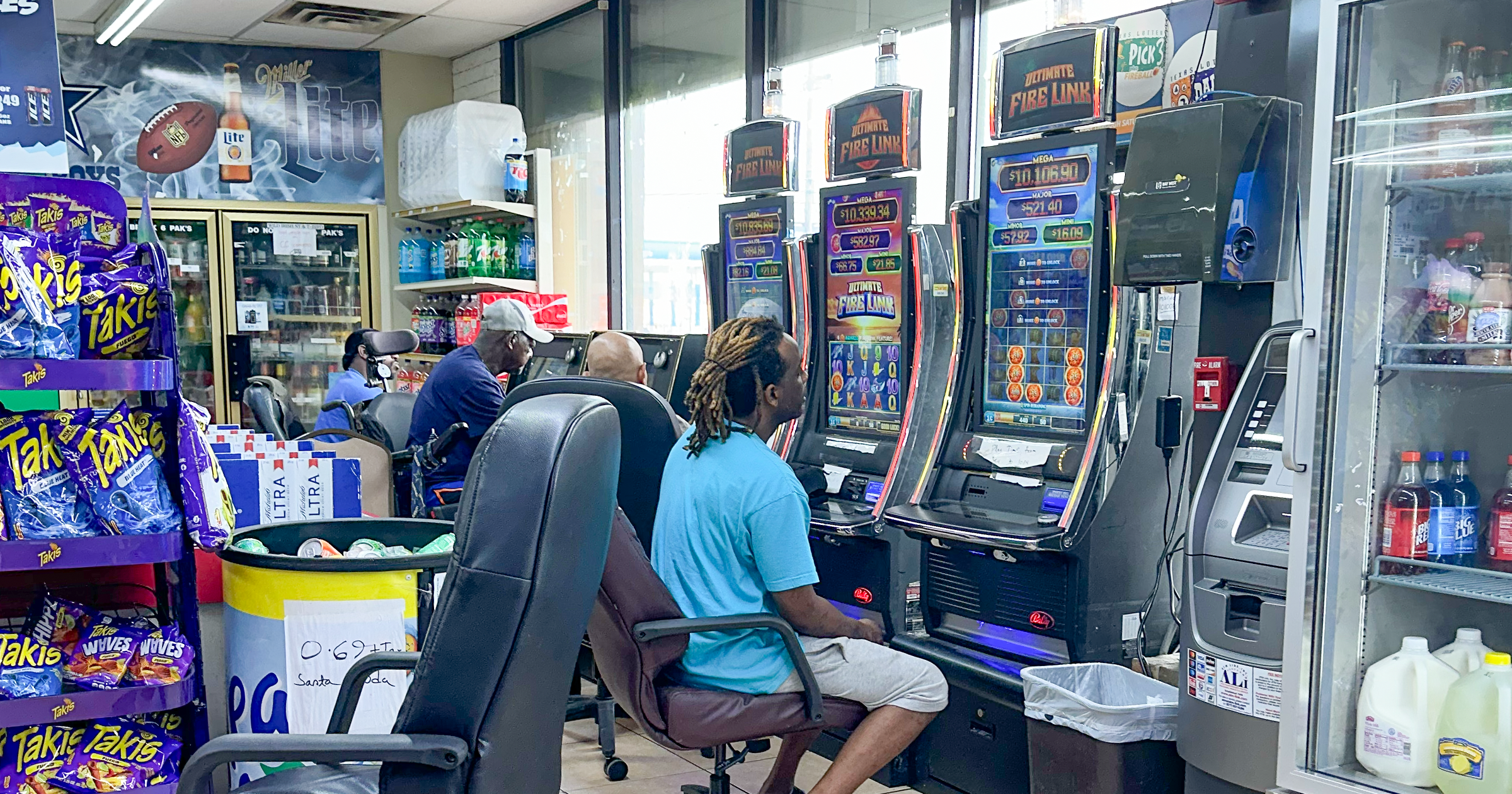
Photo by Don Dodd
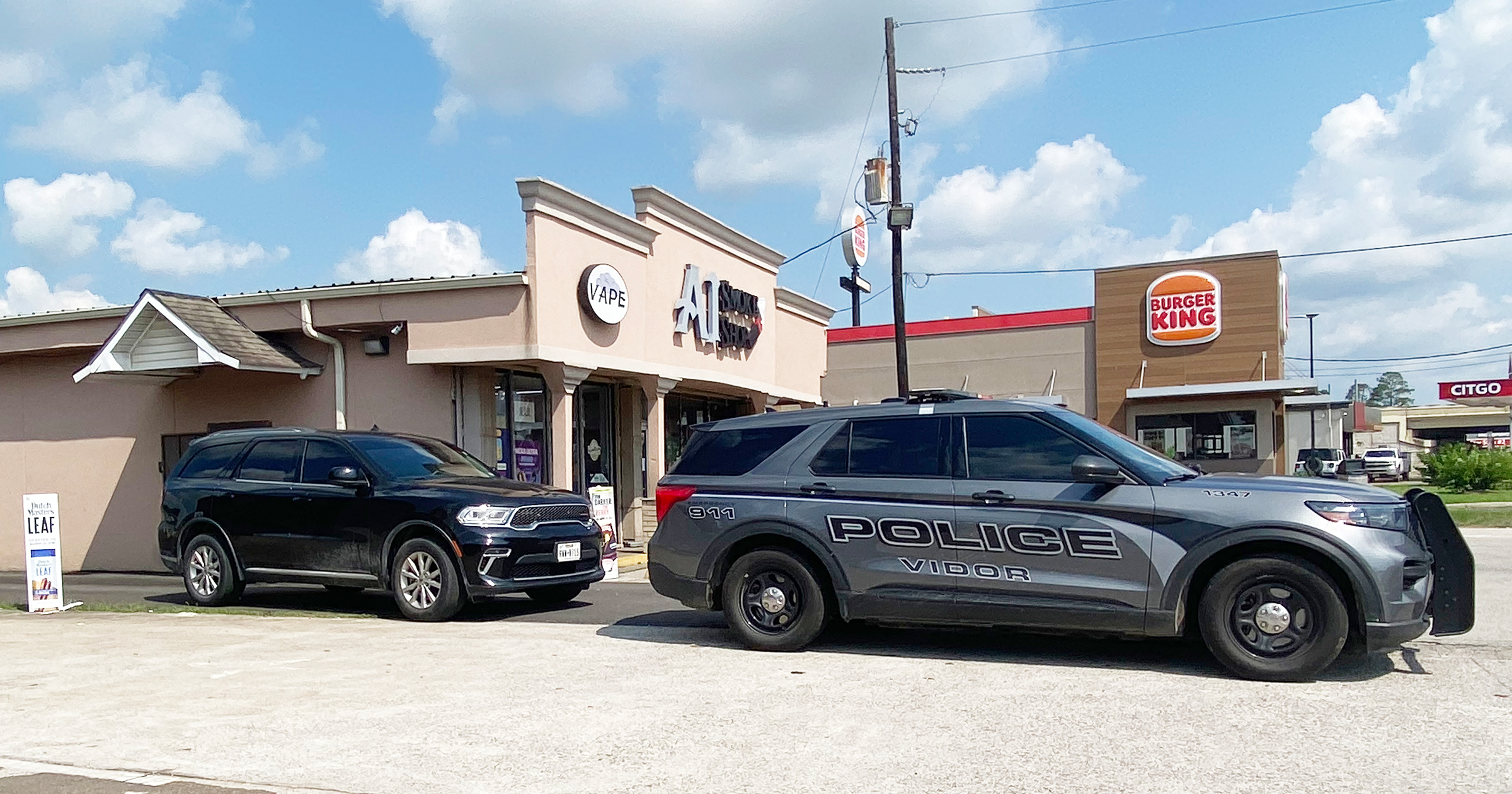
Photo by Maddie Sims