

Lamar University officials announced, for the first time in the school’s history, that the university received coveted R2 (Research 2) designation for its high research activity and doctorate production. The excitement was palpable at a press conference offered by LU officials March 4 at the Welcome Center.
The R2 designation, lauded by the Carnegie Classification of Institutions of Higher Education, recognizes LU’s “commitment to research, innovation and academic excellence.”
“Achieving R2 classification is a direct result of our work to increase externally funded research,” said Lamar University President Dr. Jaime Taylor. “This has been a priority since I became president of Lamar University, and this recognition validates that effort.”
In 2025, there are only 139 national institutions claiming R2 distinction, and only 16 in Texas, including five of the seven universities in the Texas A&M System. LU’s Dr. Gene Theodori said LU and Sam Houston State University are the only schools in The Texas State University System to achieve an R2 designation.
To qualify for R2 status, a university must award at least 20 research doctoral degrees annually and spend at least $5 million annually on research and development. With $8.2 million in research expenditures in 2024 and 64 research doctorates awarded in fiscal year 2023, Lamar University met the criteria.
A doctorate degree is the highest academic degree a student can earn, and it indicates that they have mastered a specific field of study. Doctoral degrees include education, philosophy, engineering, education and human development, according to Theodori, LU associate provost for Academic & Research Administration.
Benefits of the R2 designation include induction in an elite group of leading research institutions, demonstrating a commitment to research and innovation that reflects the quality of the university’s faculty and research support staff.
Taylor said the Carnegie Classification is the “gold standard” for recognizing the research activity of universities across the nation.
“An R2 designation means we’ve met some tough national standards for the number of doctoral degrees awarded and for total external research funding,” the president stated. “It puts us in a select group of universities that are at the forefront of research with relevance to the community.”
Taylor added the R2 designation will allow LU to make strategic investments in research infrastructure, which will help the university to continue to attract talented faculty.
“It will give our students plenty of hands-on research experiences and better prepare them for their careers,” he said. “We’ll also be able to expand our work locally through our research centers – focusing on port management, midstream operations and community resiliency. All of this, in turn, elevates the quality of education we provide at LU.”
Theodori noted LU currently manages $19 million in active research funds. Funders include federal agencies, such as the Department of Energy, National Science Foundation and Environmental Protection Agency; state agencies like the Texas General Land Office, Texas Department of Transportation and the Higher Education Coordinating Board; and charitable foundations, such as the Bill & Melinda Gates Foundation and the Welch Foundation.
“We collaborate with other prestigious universities, including Texas A&M University, University of Texas-Arlington and the University of Houston, as well as private industry leaders like AMD, Texas Instruments and BASF,” said Theodori. “This extensive network of support underscores our commitment to advancing research and innovation.”
Additionally, the R2 distinction indicates LU is committed, not only to cutting-edge research pursuits, but also to providing opportunities for students to engage in the research. The win-win approach uses practical application and fundamental theory to produce career-ready graduates equipped for real-world success, LU officials shared.
“The R2 designation reflects Lamar University’s growing reputation for research excellence,” Theodori said. “The basic and applied research conducted by Lamar University’s faculty and students not only advances scientific knowledge, but it also plays a vital role in developing near and long-term solutions to numerous real-world problems. Their work not only enhances academic discourse but also translates into innovations that benefit society, from health care breakthroughs to technological advancements.”
Lamar University Interim Provost and Vice President for Academic Affairs Dr. Brett Welch said the designation “goes beyond” acknowledging LU’s research activity.
“It’s a testament to the results we’ve achieved in expanding externally funded research,” said Welch. “It opens new pathways for faculty research while also broadening our students’ learning and internship experiences. It also strengthens our impact on Southeast Texas, providing key support to our regional research centers focused on port management, midstream operations, and community resiliency.”
Understanding the Carnegie Classification System
The Carnegie Classification system was created in 1973 to support its research and policy analysis program. The system categorizes colleges, universities and other higher education institutions in the U.S. according to the types of degrees offered and research focuses.
The applied designation identifies groups of comparable institutions among the thousands of colleges and universities in the U.S. The categorization is primarily used for scholarly purposes, enabling researchers to conduct focused higher-education research using Carnegie’s classification system.
Carnegie evaluates institutions every three years for the following research activity designations:
• Research 1: Very high spending and doctorate production
• Research 2: High spending and doctorate production
State schools with the R1 designation include Baylor University, Rice University, four University of Texas campuses (Austin, Dallas, El Paso and San Antonio), University of Houston, University of North Texas and Texas Tech University.
For more information on Lamar University’s research initiatives, visit lamar.edu/research.
.
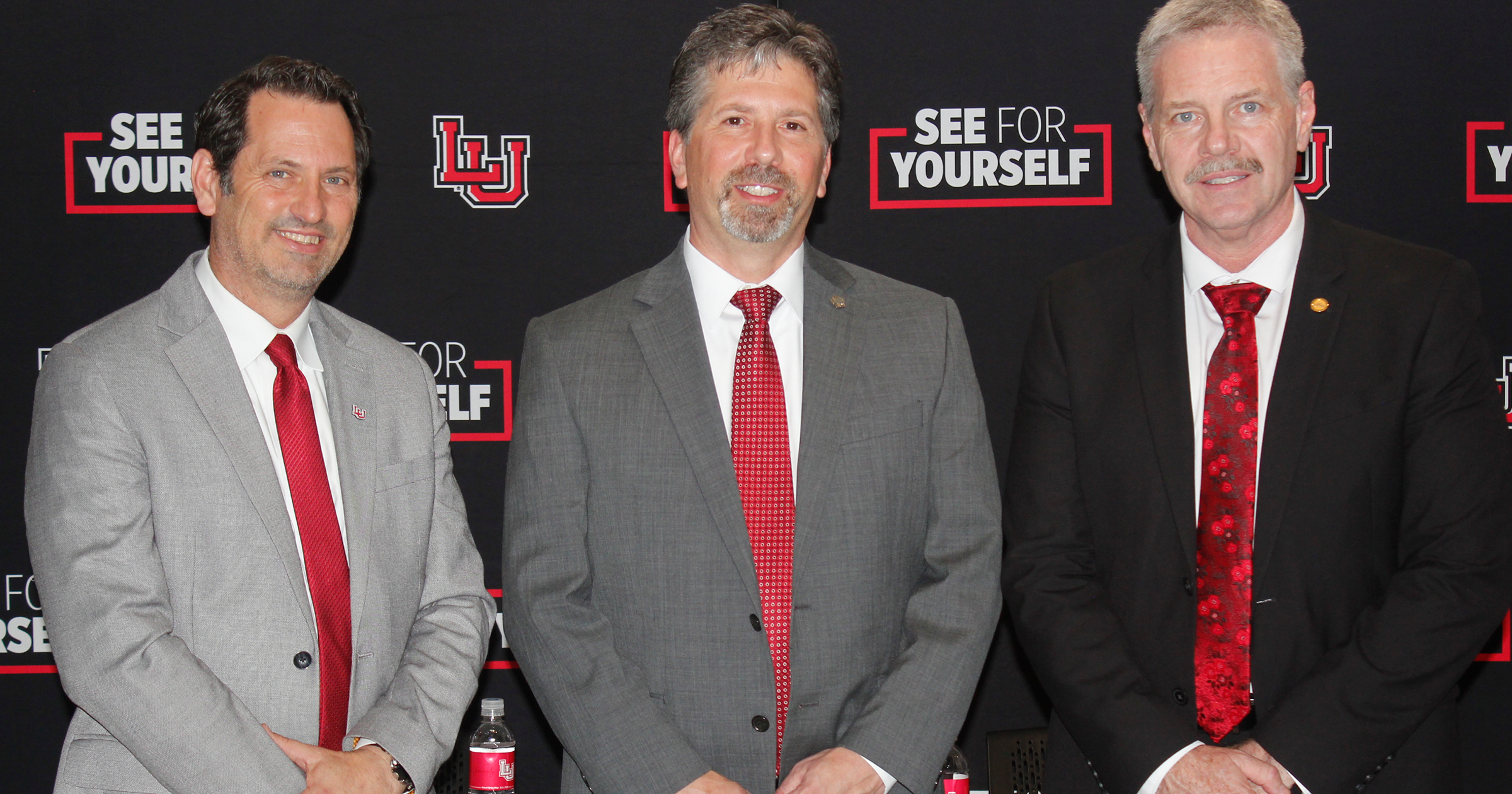
Dr. Brett Welch, Dr. Gene Theodori, President Jaime Taylor (Photo by Dannie Oliveaux)
.