

Just days after the trial of an alleged Beaumont murderer ended in mistrial, yet another alleged murderer decided to take his chances with a Southeast Texas jury, as well, rejecting a deal for 35 years in prison in exchange for a guilty plea – both events taking place in Jefferson County Judge Raquel West’s 252nd District Court.
West declared a mistrial Jan. 30 after the jury, following approximately six hours of deliberation, reported being at an impasse and unable to reach a unanimous verdict in the capital murder trial of 32-year-old Paul Edward Westbrooks Jr.
Westbrooks faced charges of capital murder by terror threat and murder in connection with the shooting deaths of 32-year-old Ahmad Hayden and 31-year-old Roven Dotson. The fatal incident occurred during an early morning home invasion robbery on April 10, 2023, in the 1800 block of Elgie Street.
Jan. 29, Dijon Ivory, 32, who had previously pleaded guilty in the same case and was sentenced to 35 years in prison, testified for the prosecution. However, as prosecutor Phillip Smith questioned him, Ivory remained silent for several minutes, refusing to respond to questions seeking details from Ivory’s previous statement, including who was driving the vehicle the day of the murder, who else was present, etc. Ivory, however, claimed he could not remember the details.
“Two men died because of what happened that night,” Smith reminded Ivory to sway the witness into telling what he knew. “You have accepted responsibility, but justice demands everybody that’s responsible be held accountable and, to do that, you’re going to have to answer these questions, and I need you to answer them truthfully.”
During closing arguments, Smith contended that the evidence left no doubt of Westbrooks’ guilt in the capital murder case – the defendant, the prosecutor contended, either pulled the trigger or played a role in facilitating the crime.
In contrast, defense attorney Joel Vazquez challenged the prosecution’s case, arguing that it relied heavily on testimony from accomplices, which, by law, requires independent corroboration to be deemed credible. Vazquez also highlighted the absence of physical evidence linking Westbrooks to the crime scene.
With the jury unable to reach a unanimous decision, the case against Westbrooks remains unresolved. It is now up to prosecutors to decide whether to pursue a retrial, negotiate a plea deal, or dismiss the charges.
Less than a week later, Feb. 4, Brandon Dodd, 39, of Beaumont, stood in West’s court and rejected an offer of 35 years in prison for a guilty plea detailing his alleged role in the Sept. 14, 2024, murder of Ronald Barnes.
Prosecutor Tommy Coleman informed Judge West that the state had filed a habitual offender notice against Dodd. If convicted, Dodd would be subjected to an enhanced sentence ranging from 25 to 99 years due to his prior felony convictions.
Dodd has previous convictions for aggravated robbery and an attempted Hobbs Act robbery. He is currently represented by attorney Nathan Reynolds, who stated he would be trial-ready after reviewing discovery related to co-defendant Romeo Randolph Johnson, 36.
According to Dodd’s Dec. 11, 2024, indictment by a Jefferson County grand jury, Beaumont police responded to the 2200 block of Ives Street for a welfare check after receiving a 911 call from Ronald Barnes. Barnes, who had been hiding for approximately 20 to 30 minutes, was found dead upon officers’ arrival, having suffered a single gunshot wound to the shoulder. His death was ruled a homicide.
Community tips reported by the Beaumont Police Department identified Johnson as a potential suspect; CCTV footage from that night at Amigos showed Johnson in possession of a firearm just before the homicide; and video evidence also captured Dodd arriving at Amigos to pick up Johnson shortly before the murder. Additionally, Real-Time Crime Center (RTCC) surveillance tracked Dodd’s vehicle along MLK and Concord around the time of the incident.
Statements given by both Dodd and Johnson to law enforcement were reportedly inconsistent with each other and contradicted RTCC video evidence. Further investigation into Johnson’s phone location data allegedly placed his device both outside and inside Barnes’ Ives Street residence during the time of the homicide.
Surveillance footage from a neighboring home showed two individuals approaching the Ives Street residence on foot at approximately 2:34 a.m., entering the home and leaving hastily at 2:38 a.m. Based on the evidence, police reported, both Dodd and Johnson were arrested, charged and indicted for murder.
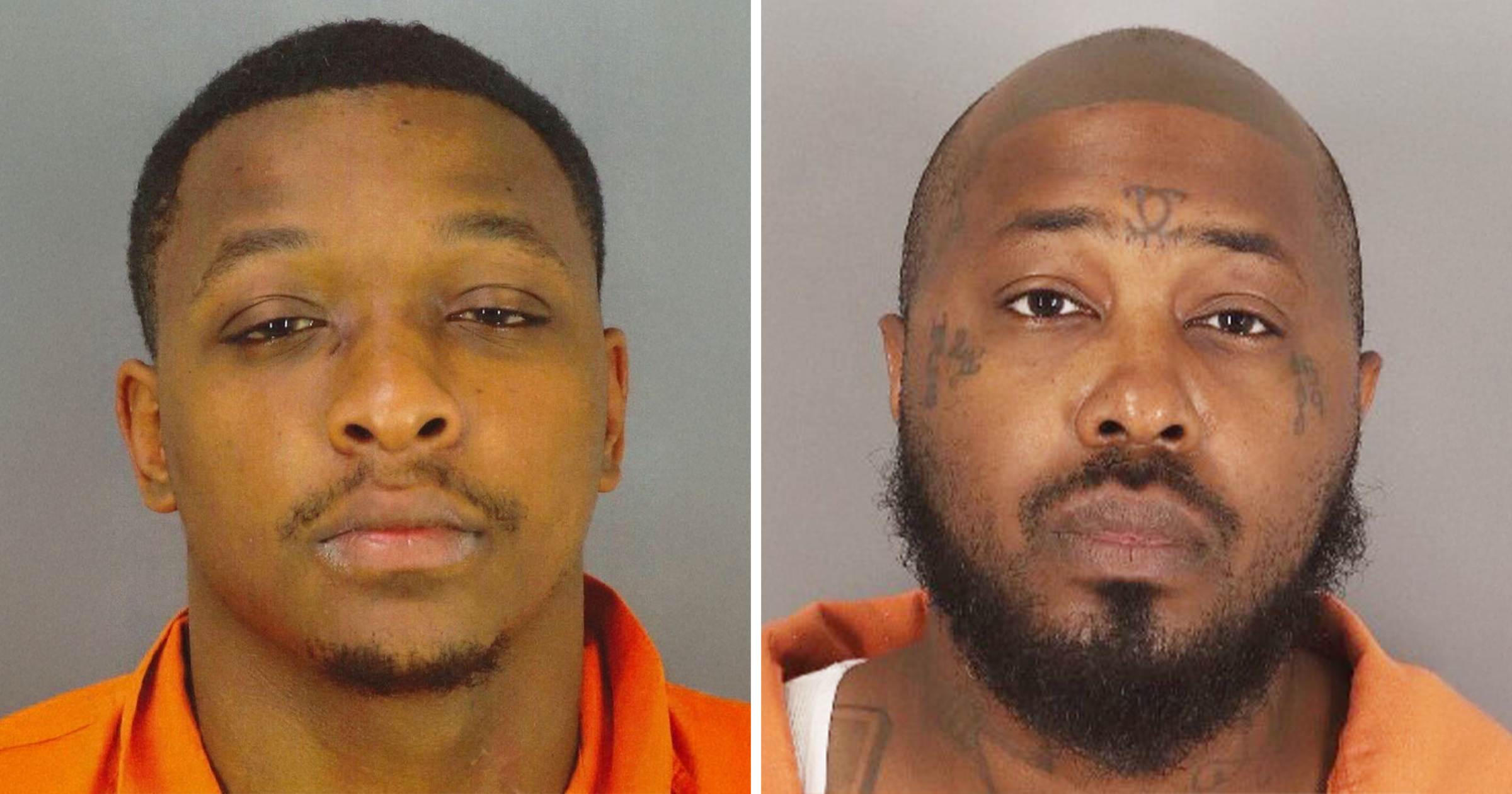
Westbrooks, left, and Dodd