

The Nov. 5 General Election is less than two months away and more than 1 million names of ineligible voters have been removed from the state’s voter rolls since Senate Bill 1 was signed into law in December 2021, according to Gov. Greg Abbott.
The removed names include those of people who moved out of Texas, who died and who are not citizens, among other factors, and the governor’s office said the removal process continues.
“Election integrity is essential to our democracy... Illegal voting in Texas will never be tolerated. We will continue to actively safeguard Texans’ sacred right to vote while also aggressively protecting our elections from illegal voting,” Abbott said.
Abbott said Secretary of State Jane Nelson and county voter registrars have an “ongoing legal requirement” to review voter rolls, remove ineligible voters and refer any potential illegal voting to the Attorney General’s Office and local authorities.
In Jefferson County, 12,656 names have been taken off the voter rolls for various reasons, from Dec. 2, 2021, until Sept. 11, according to Voter Registration Supervisor Alicia Monk.
Monk reported the breakdown, by number, of the reasons why voters were cancelled: 5,369 deceased, 5,195 on suspended list, 1,023 confirmation response, 1,002 by investigation, 28 requested by voters, 16 were mentally incompetent, 12 were felons and one was not a United States citizen.
“Our office receives information from a multitude of agencies throughout the county and state, including the local registrar of death for each city and county, Bureau of Vital Statistics, Department of Public Safety and U.S. Federal Courts,” explained Monk. “We are required and complete Daily List Maintenance as part of our standard duties, except during the 90-day National Voter Registration Act of 1993 (NVRA) moratorium which starts 90 days prior to a federal election.”
Orange County Elections Administrator Donna Alford said that, every year after a federal election, the rolls are updated.
“We conduct a purge of the suspended voters who have been in suspense for four years and have not updated their address,” she said. “That’s just normal operations.” According to the Secretary of State Office, a voter is placed on the suspended list if the county’s elections department believes the voter no longer lives at the residence they listed on their registration. The voter will receive a notification in the mail to double-check. If the state does not get a response from the voter, the voter will be placed on the suspended list. If a person is on the suspended voter list for roughly four years or two federal election cycles, they can be removed from the state’s voter rolls entirely and the voter will need to reregister.
“Once a voter is placed on the suspense list, they are on that list for two federal election cycles. Assuming a voter has not, in fact, moved, they are still able to vote but will need to sign a statement of residence at the polls. At that time, the voter will no longer be on the suspense roll,” according to Alicia Pierce, assistant secretary of state for communications.
According to the Secretary of State staff, voters on the suspended list can still vote if they live in the same county where they were registered. When a suspended voter shows up at the polls on Election Day or during early voting, they will be asked to fill out and sign a “Statement of Residence” form. If the voter has moved out of the county where they were registered, they must register to vote in their new county.
Alysa Freeman, elections administrator for Hardin County, reported her office has not had a problem with individuals attempting to vote illegally for the Nov. 5 general election.
Prior to the county election administrator office being established in January, Tax Assessor-Collector Shirley Cook said the Secretary of State’s office would send a list periodically to check names on the voter rolls.
“The names they gave us, we didn’t have to remove because they were not on our list,” she added.
Since SB 1 was signed into law three years ago, the Secretary of State’s Office reported of the more than 1 million people removed from the voter rolls:
• Over 470,000 were deceased
• Over 463,000 were on the suspended voter
• Over 134,000 moved out of state
• Over 65,000 failed to respond to a notice of examination
• Over 19,000 requested to cancel their voter registration
• Over 6,500 were noncitizens
• Over 6,000 have a felony conviction
The governor’s office reported that, of the more than 6,500 noncitizens removed from the voter rolls, approximately 1,930 have a voter history. The Secretary of State’s Office is in the process of sending all of those voter records to the Attorney General’s Office for investigation and “potential legal action.”
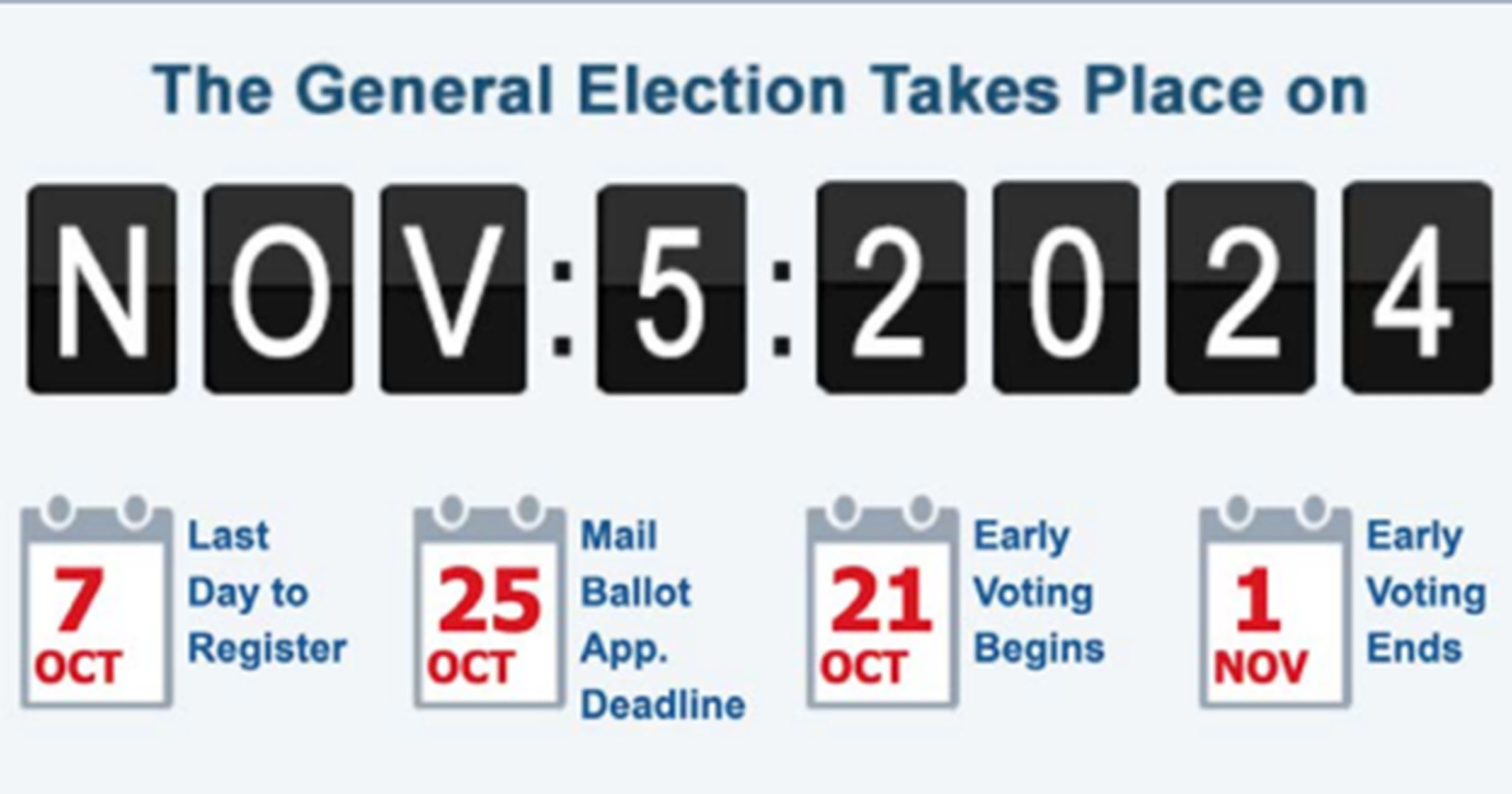
The last day to register for the November election is Monday, Oct. 7. The deadline for mail ballot applications is Friday, Oct. 25. Early voting is Monday, Oct. 21, through Friday, Nov. 1.
According to the state’s Election Code, to be eligible to register to vote, a person must be 18 years or older on election day, be a U.S. citizen, be a resident of the county where the application is submitted, not be finally convicted of a felony or, if so, have completed the terms of the jail sentence, probation or parole, and have not been declared by a court exercising probate jurisdiction to be either totally mentally incapacitated or partially mentally incapacitated without the right to vote.
To register to vote, a person must submit an application either in person or by mail to the county voter registrar in the county in which the voter resides. The application must be in writing and signed by the applicant.
Nelson reminds Texans that now is the time to make a plan to vote in the Nov. 5 Election.
“My goal is to make sure every qualified Texan who wants to vote has all the information they need to cast a ballot,” said Nelson.
She noted the essential things to remember to bring when you head out to vote this election season, including one of the seven accepted forms of identification (Texas driver license, Texas handgun license, U.S. citizenship certificate, Texas personal ID card, Texas election ID certificate, U.S. passport or a U.S. military ID card) voters can use when voting in person.
.