

Tuesday, May 6, ripples of compassion swept through the Holiday Inn on Walden Road, as Mental Health America of Southeast Texas hosted its second annual Mental Health Matters Luncheon. What began as a gathering to celebrate progress and raise awareness became an emotional testament to the battles fought – both publicly and privately – against the silent epidemic of mental illness. Through tears, truth and triumph, those honored at the luncheon championed the belief that mental health challenges impact every life and that no one, no matter their title, is untouched.
Local MHA Board President Vernice Monroe welcomed a crowd of hundreds, shining a light on the noted generosity of Joy and Will Crenshaw and H-E-B Grocery, whose support made the event possible. But it wasn’t long before the shared stories cut through titles and applause, uniting every guest under a single truth: mental health matters because people matter.
“This is the only way we can serve our community – together, with open minds and open hearts,” said Spindletop Center CEO Holly Borel.
Among those honored at the event, Borel, with over 35 years served in community mental health, shared her own deeply personal journey of navigating untreated mental health struggles from age 16. Today, as CEO of Spindletop Center, she leads programs that served over 17,000 individuals last year, a measured 152% increase over the last decade. Her voice, clear and steady, reminded all present of the urgency and the hope: “When someone finds the courage to reach out for help, help must be available.”
Also honored, Dr. Michael Gillespie, board-certified psychiatrist and a touted “quiet hero” at Baptist Hospital of Southeast Texas – the region’s only acute crisis stabilization center. He has served more than 6,000 patients, many on the brink of despair.
“We are the catch-all for anyone who is an imminent risk of harm to themselves or others,” said Dr. Gillespie. His voice swelled with pride as he spoke about Baptist’s $70 million expansion to further serve the mental health needs of Southeast Texans, increasing inpatient beds and adding outpatient resources. “Our goal is that every person leaves with renewal – a new purpose – so that the suicide rate in our area drops dramatically.”
“It is an absolute privilege,” Gillespie added, to be able to offer the much-needed service.
Bishop Emeritus Curtis J. Guillory, who for decades has championed care for the most vulnerable, was among the mental health supporters called to the event podium.
“Unfortunately, mental illness still carries stigma,” he said. “So many families are struggling and don’t know what to do. Thank God for Mental Health America of Southeast Texas – advocating, educating, bringing hope.”
A particular gut-wrenching account, however, came from honoree, Sheriff Zena Stephens, whose leadership and advocacy has transformed how law enforcement in Jefferson County approaches mental health. From implementing the region’s first mental health deputy program to launching a forthcoming 20-bed diversion center, Stephens made one thing heartbreakingly clear: these programs save lives.
In a moment of vulnerability that stilled the room, Stephens recalled the deaths of two friends, both bright lights in the community, who died by suicide.
“He was a great detective, with a beautiful family and everything to live for… we got him help at a mental health facility and then transferred to another facility … took all the guns out of his house,” Stephens shared, the beginning of a story known all too well by all too many. “He got released, came home and tied an extension cord from the attic and hung himself.
“I never gave up on the idea that, if I could have got to him one more time, for just a few more minutes, I could have talked him out of it.”
Melancholy and morose musings of a friend still grieving hung hard in the air, but Stephens’ stoic mission was clear: she wants to give people those few more minutes. Stephens continued to recollect the tragic end days of the late detective, as well as former patrol colleague, Kim Seago, another life that could have been saved with a few more minutes put to good use.
“I knew for a fact he wanted to live because he told me that,” and “after many conversations with Kim Seago, I knew she wanted to live,” said Stephens of her friends and colleagues – pointing to the new diversion center being a place for people to “live.” “This diversion center is about one more minute, one more hour, one more chance – to get people out of crisis and into care.”
Event Keynote Speaker Lisa Helfman, Managing Director of Public Affairs Houston for H-E-B Grocery, followed with divulging details of a time very personal to her, when her teenage son was struggling with his mental health. She said finding the right resources and remaining open and calm led to his recovery. The event was highlighted as Helfman’s son, Drew, took to the stage next to his mom, holding his head high as a survivor, a fighter and a champion for mental health, himself. For members of the audience, Drew’s presence was not just moving, it was hope made real.
The luncheon was the culmination of efforts by Kim Phelan and Regina Rogers, supported by a tireless planning committee: Sally Broussard, Shelley Tortorice, Garrett Craver, Kathryn Sheppard, and Mary Young. Together, they ensured that this wasn’t just an event, it was a movement.
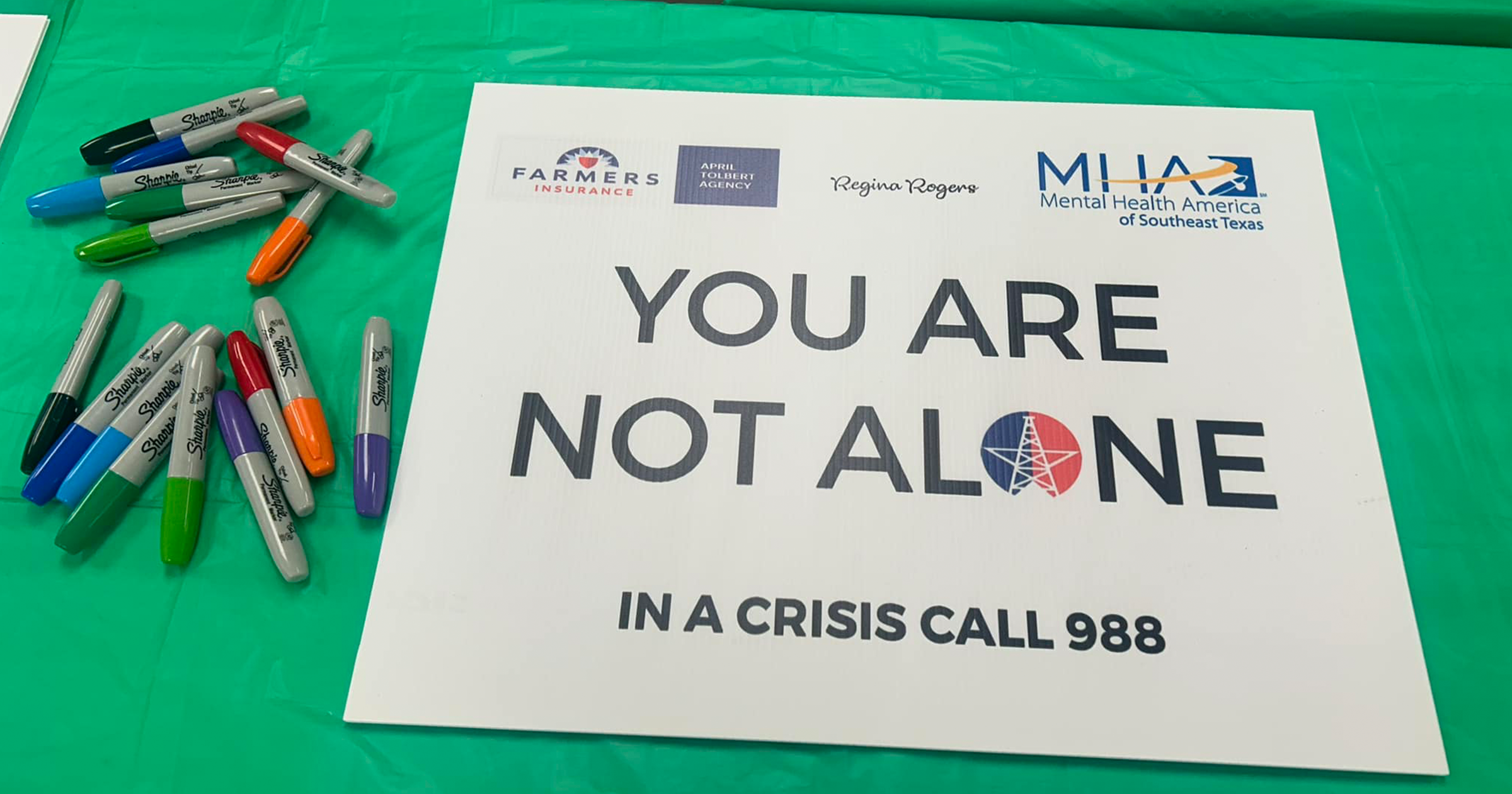
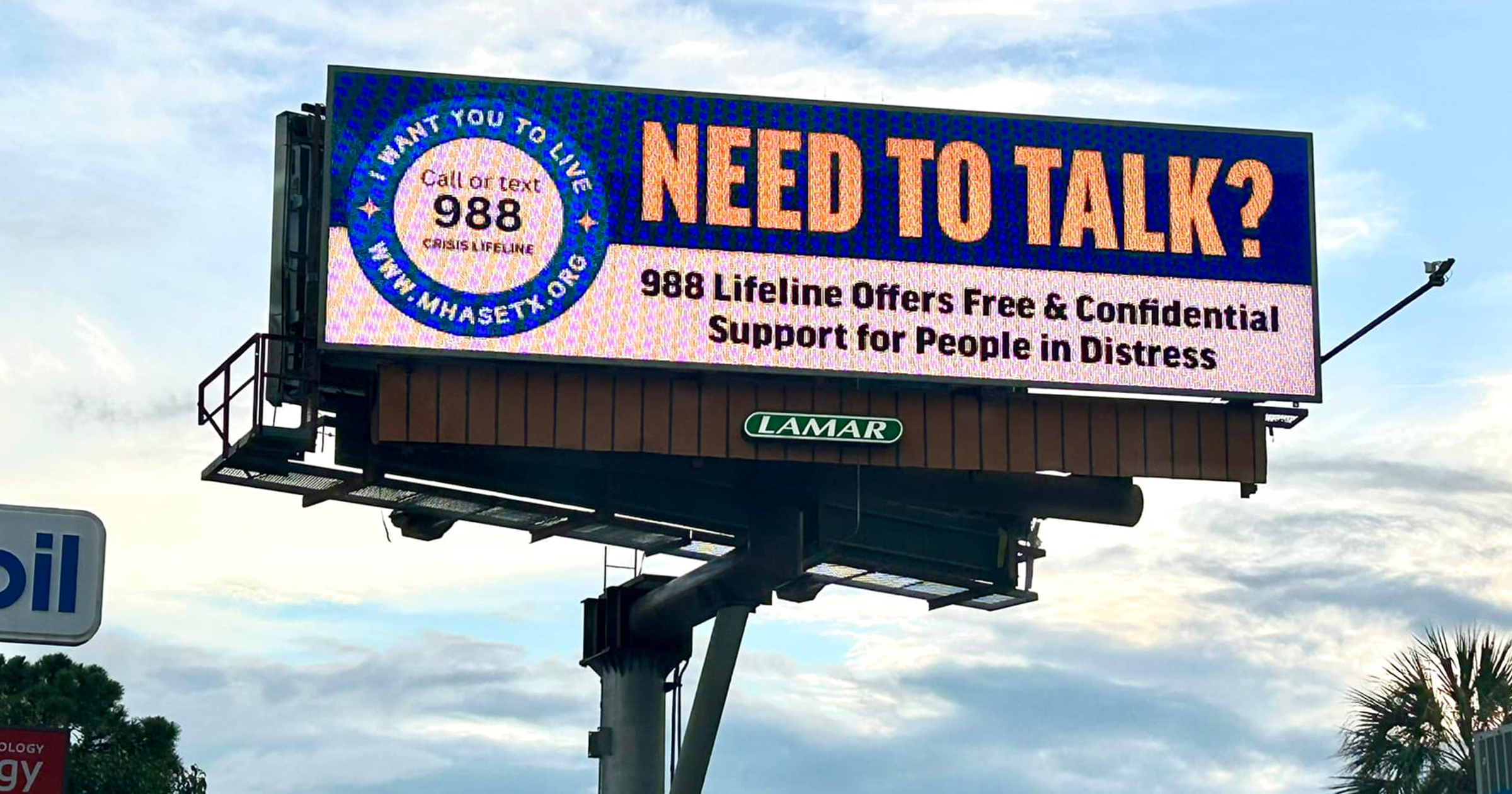
Not content to let the momentum die, event organizers continued to reiterate that the work is constant. Although the event is over, to those families left behind, and to those still fighting – you are seen, you are valued, and you are needed in this world. Depression is real, common and treatable. Just a few more minutes, one more time – you can change your life, and help is available:
Call or text the Crisis Lifeline at 9-8-8; Rape and Suicide Crisis Center of SETX, (409) 823-6530; National Human Trafficking Hotline, 1-888-373-7888; Domestic Violence, (409) 832-7575; Veteran’s Crisis Line, 988 and press 1; Social Services Hotline, 211.
.
.
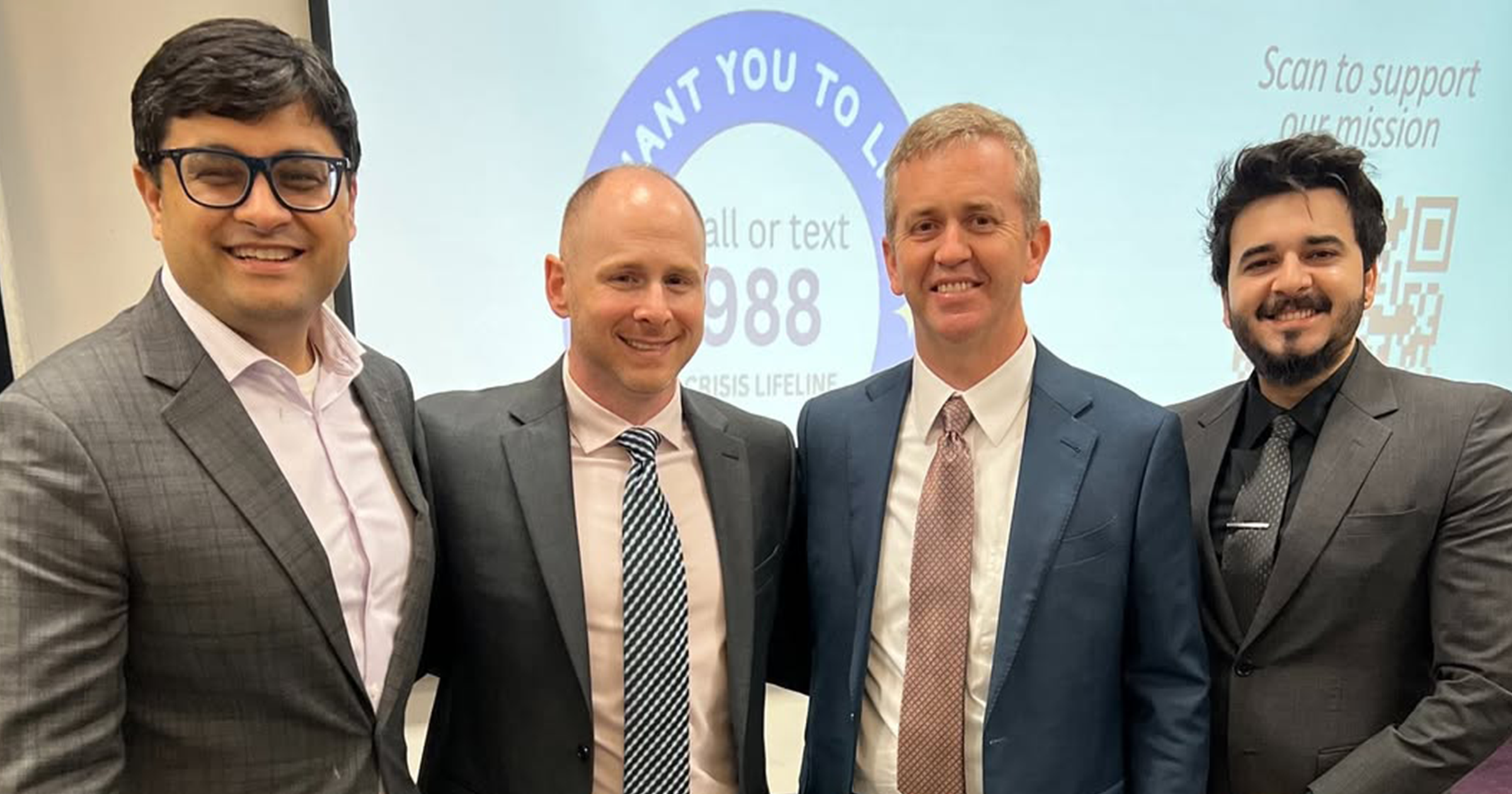
Baptist Hospitals of Southeast Texas congratulate Dr. Gillespie (second from left) on being honored by MHA of SETX
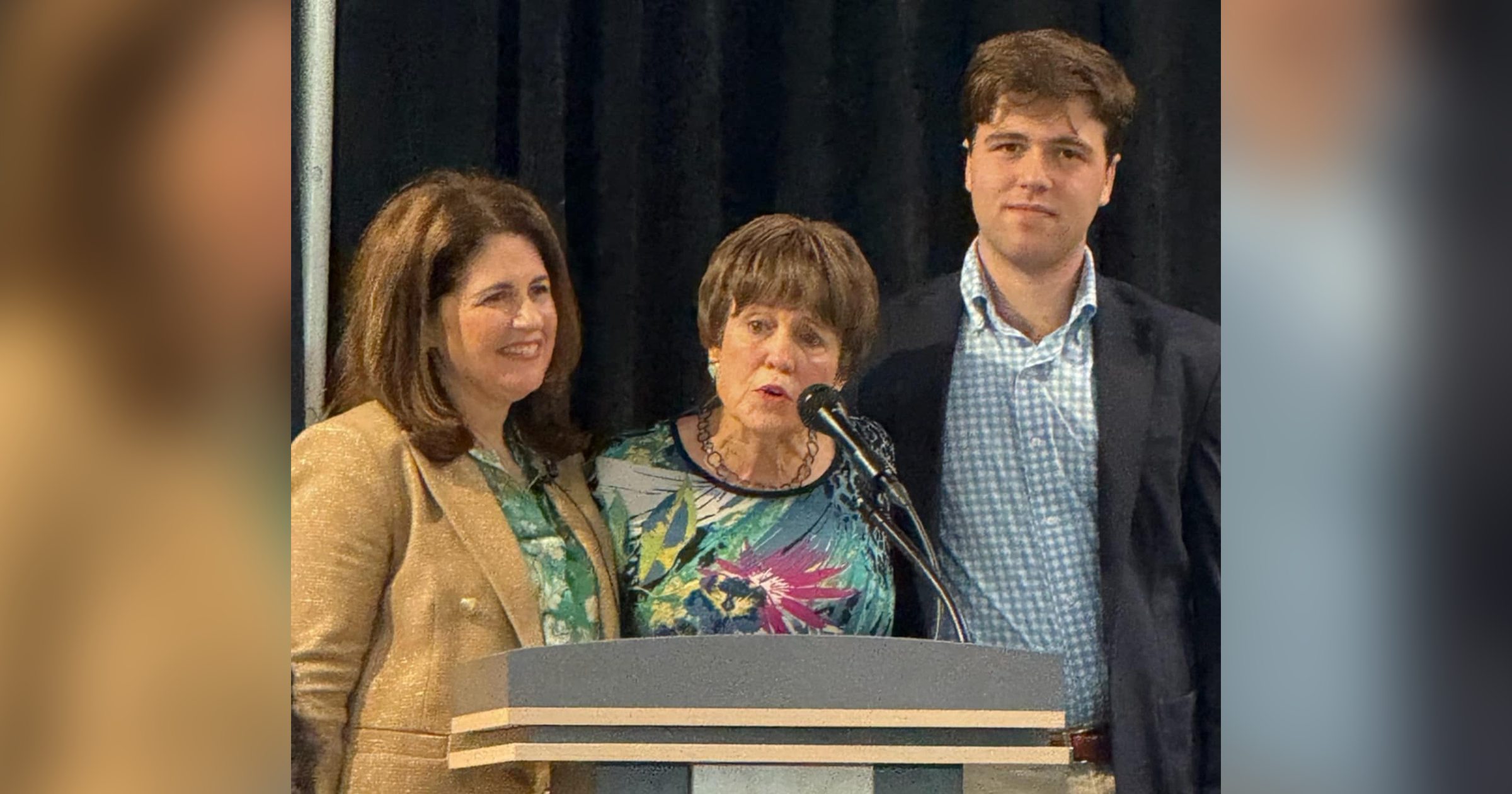
Keynote Speaker Lisa Helfman, Managing Director of Public Affairs Houston for H-E-B Grocery, joined by son Drew and MHA of SETX Luncheon Co-Chair Regina Rogers