

Six and a-half years after an explosion and fire occurred at the TPC Group chemical plant in Port Neches, South Jefferson County residents were shaken by a March 23 plant explosion and fire at the Valero refinery in Port Arthur.
The explosion and fire, reported at approximately 6:20 p.m., resulted quickly in a shelter-in-place order issued through Sheriff Zena Stephens. Emergency operations impacted the west side of Port Arthur, including Stilwell West to South of 73, including Pleasure Island and Sabine Pass.
Jefferson County Judge Jeff Branick reported that the plant explosion fire was extinguished at 3:23 a.m. March 24, roughly eight hours after sparks ignited. It would be another two hours, until roughly 5:30 a.m., before the shelter-in-place order was lifted and State Highway 82 reopened, according to messages sent over the Southeast Texas Alerting Network STAN.
Even as the fire raged on, Valero Public Affairs manager Carol Hebert reported that all plant personnel had been accounted for and no injuries were reported.
“Valero’s emergency response team is responding and coordinating with local authorities,” Hebert advised in the explosion’s aftermath. “As always, the safety of our workers is our top priority.”
The county judge, who was in the Incident Command Center on his birthday, said he was impressed by the well trained and highly skilled emergency response personnel of Valero.
“They understood the processes, products and procedures, and they worked together under the incident command and control framework in a collaborative and effective way,” Branick said. “My appreciation (goes) to the many first responders on scene, most importantly our frontline firefighters.”
Branick also reported that air monitoring performed by Valero, the U.S. Environmental Protection Agency (EPA), Texas Commission on Environmental Quality (TCEQ) and others did not indicate exceedances of safe thresholds at this point.
TCEQ reported emergency response coordinators and regional staff were deployed with handheld and mobile air monitoring assets in response to the Valero fire in Port Arthur.
“In the coming weeks, we should have a much better idea of the cause of the explosion,” Branick said. “Jefferson County will work with Valero in an after-action review to better prepare for and respond to any emergencies that might occur in our community.”
It was reported that students riding the bus home from Monday classes were stranded in Sabine Pass Monday while the shelter-in-place order was in effect. The Jefferson County Sheriff’s Office Marine Unit was utilized to ferry the children home by boat.
Port Arthur ISD officials reported no damage. All campuses operated on normal schedules Tuesday.
In an initial emissions event report filed with TCEQ, Valero stated an “unforeseeable release of process fluid in Complex 2” led to an ignition event and multiple process unit upsets, according to March 25 media reports.
Valero also stated in the report some kind of petroleum based material was released in one part of the refinery, ignited, and then disrupted multiple major units, including the crude distillation unit, diesel hydrotreaters, fluid catalytic cracker, hydrocracker, hydrofluoric alkylation unit and sulfur recovery units. Those are some of the refinery’s core systems used to transform raw crude oil into high-value consumer products like gasoline, diesel, and jet fuel.
Local event, global impact
Valero, the largest refinery in Texas, receives crude oil by rail, marine docks, and pipelines. Products are distributed into pipelines and across the refinery docks into ships and barges.
The Port Arthur Refinery is adjacent to the Diamond Green Diesel (DGD) plant, which is currently increasing capacity to 1.2 billion gallons of renewable diesel and 50 million gallons of renewable naphtha per year. DGD is a joint venture between Valero Energy Corporation and Darling Ingredients Inc. producing renewable diesel.
According to Valero’s website, there are approximately 770 employees and the plant processes about 435,000 barrel of crude oil per day into gasoline, diesel and jet fuel.
With war in the Middle East straining refined good access, unexpected dilution of America-born products and services are monitored both near and far. Concerns as to a possible terroristic culprit for the explosion were met with pointed response: officials do not believe the event was a targeted attack.
Nov. 27, 2019, an explosion and fire occurred at the TPC Group chemical plant in Port Neches, not far from the Valero site. The 2019 event injured five people and forced approximately 50,000 residents to evacuate.
TPC’s explosion was reportedly caused by a buildup of “popcorn polymer,” a dangerous byproduct from handling butadiene, which the company allegedly failed to control. The final report on the incident was released Dec. 19, 2022. TPC Group pleaded guilty for the explosion and the incident’s violation of the Clean Air Act; they received 1-5 years of probation, an $18 million fine, and was ordered to pay victim restitution and issue a public apology.
The company reportedly paid out more than $212.5 million in damages and monitoring fees.
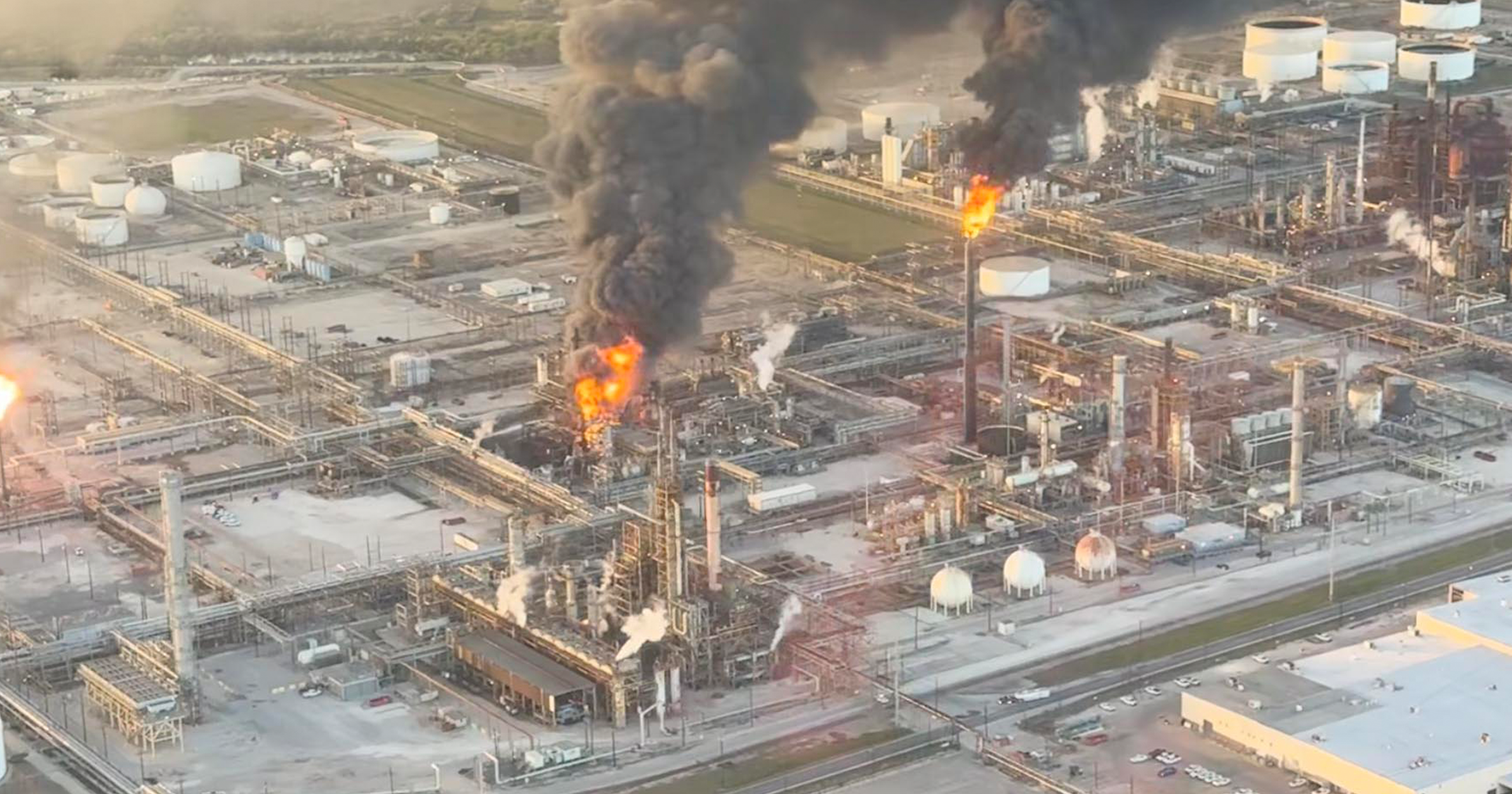
Ariel view of Valero refinery in Port Arthur