

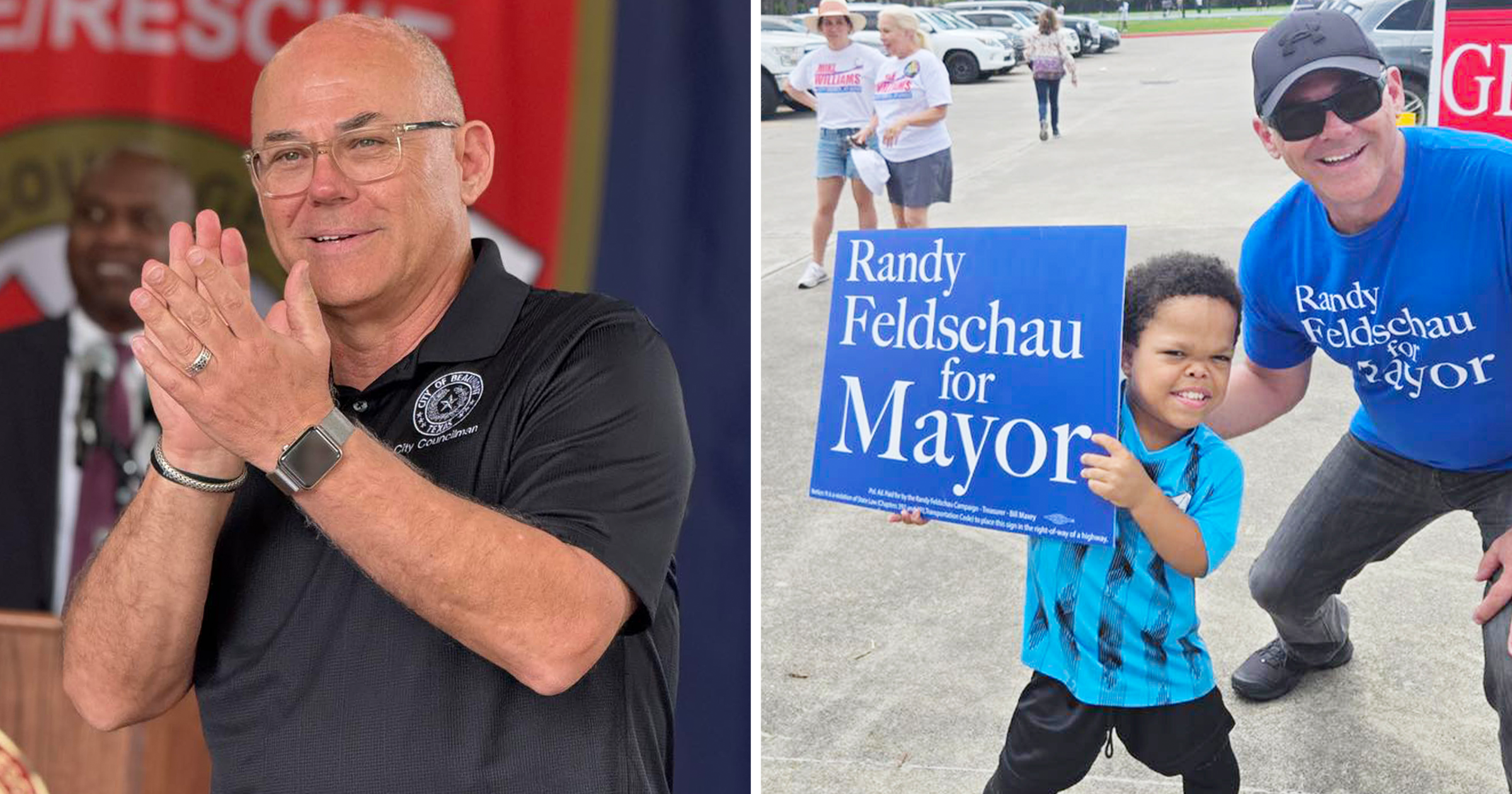
As the city of Beaumont plods through yet another fiscal year with anticipated expenditures exceeding anticipated revenue, coupled with generous wage increases across the board, one candidate for mayor has said that enough is enough – and taxpayers should not be asked to shoulder added costs that should be absorbed by businesses or already funded through tax dollars. Randy Feldschau, who has made a mark voting as a fiscally conservative member of the Beaumont City Council since 2019, is now seeking the position of mayor to continue to keep a watchful eye on how officials and staff account for money that rightfully belongs to the residents of Beaumont.
Feldschau balked at ever-increasing water and sewer rates, utility and rental fees jacked up and passed on to residents at a profit for the city, and the notion that residential taxpayers be further charged to build waterfront infrastructure that private industry has, to date, not seen fit to invest in privately. Still, as a member of the larger community, the candidate for mayor softens to the idea if voters elect to make the administrative dream a reality funded through the pockets of residents.
The main problem Feldschau noted with the city finances isn’t finding funding for specialty projects – it’s the fact that the current administration is basically using savings account money to pay for regularly recurring bills – particularly adding several six-figure administrative staff salaries among the 79 new hires added to the payroll per page 293 of the current year’s city budget. And, as a man who has run large banking accounts – or, as anyone with any fiscal knowledge would agree – Feldschau said he knows paying routine bills with savings money will eventually deplete the savings account.
Even on the losing side of the fight for a structurally balanced budget, Feldschau said he felt compelled to stand for what he believed was right. When City Manager Kenneth Williams put forward a deficit spending budget in 2023, Feldschau said, he was concerned, but realized the city leader was new to the office; maybe next year will be better.
In 2024, the Williams administration again put forth a deficit spending budget; this time, Feldschau said, he sought assurance from the city manager that the next budget would not further dip into the city’s reserve funds. In 2025, when a third deficit spending budget was put forward; Feldschau felt it was time to vote his conscience.
“I knew I would lose, but it was the right thing to do,” to vote against accepting sub-standard budgeting from highly compensated staff – only for the staff to again seek a raise just a few short weeks later. Or, as the staff would say – not a raise, but an increase in pay.
Staff also alleges that a deficit spending budget is balanced – which is true, but not in the manner supported by the ruling principles of the GFOA (Government Finance Officers Association), which recommends that governments maintain a “structural balanced budget,” where recurring revenues are greater than or equal to recurring expenditures in the adopted budget.
“Using reserves to balance the budget may be considered, but only in the context of a plan to return to structural balance, replenish fund balance and, ultimately, remediate the negative impacts of any other short-term balancing actions that may be taken,” GFOA advises. “Further, the plan should be clear about the time period over which returning to structural balance, replenishing reserves and remediating the negative impacts of balancing actions are to occur.”
According to Feldschau’s review of the audited finances and proposed budgets of the city of Beaumont since 2019, when the fund balance topped $50 million, there is a trend of decline. Since the first Williams-promoted budget in 2023, Beaumont has dipped upwards of $6 million into reserve funding.
Feldschau does not disagree that the money belongs to the community, as has been promoted by current Mayor Roy West in his efforts to use the funds for staff raises and a cadre of consultants, amongst other things. However, Feldschau is of the opinion that “giving the money to the residents” would be better effected by not continuing to raise water and sewer rates every couple of months, maybe funding city-sponsored youth sports, filling potholes, hiring more firefighters – things that the average resident needs instead of pet projects for city staff. Then, there is always lowering the tax rate if the city is really collecting too much money that needs to be stashed and used for deficit spending with little oversight.
Fiscal reform is not all there is to Feldschau’s campaign, though. Although he routinely gets questioned about how his role as the pastor of One City Church fits with being an elected politician, the longtime man of the Lord is quick to indicate that his connection to God is a pro, not a con. And, as a current seated city councilman, Feldschau points to years of elected civic service that prove the Southeast Texan can both be true to his faith and his fellow man.
Serving as pastor of a large congregation shows that Feldschau can work with a large group toward a common goal – and effectively manage the participation of members representing an array of denominations, races, genders and societal roles.
“There was a time when we had moral leaders – who would treat you the way they would want to be treated,” Feldschau said of where his moral compass points. “I defend the rights of all people.
“I think it’s best for Beaumont to get our God-fearing people involved. We need to inspire our young people with people of integrity.”
Feldschau, whose public service can be noted even before he held political office, said, by the time he decided to serve in a municipal position, “It was a natural transition.”
Since 2016 alone, under the direction of Feldschau, One City Church has tackled disaster relief, disaster rebuilds, sex trafficking cessation efforts, homeless outreach, addiction outreach, gun buyback programs and more.
“We want to make a difference in our community,” Feldschau summed up of not only himself, but those that support him from the church, the community and extended family and friends.
.