

In a joint special meeting March 31, Port Arthur City Council members and Economic Development Corp. (EDC) officials discussed bringing a grocery store to the “food desert” in the downtown area.
The problem, official stated: There are no major grocery stores downtown. Aside from several small neighborhood convenience stores, the nearest major retailers are H-E-B on 16th Street, 3.4 miles from City Hall, and Market Basket on West Port Arthur Road, which is 6.4 miles from City Hall.
“Ever since I was on council, we’ve had the same problem, and that is, once you get to a certain area of our community, it’s a food desert,” said EDC President Morris Albright. “We can build homes, but if there’s nothing down there, who’s going to want to live in those homes?”
Albright said the EDC board has discussed hiring a consultant to study traffic counts and other data and to contact H-E-B, Aldi, and other grocery retailers to court construction.
“Do a build-to-suit that will literally charge them $1 or $100 a year in rent,” Albright said, adding that the plan will only work if it involves a major retailer. “And, if they want to partner with the city, that’s fine.
“Because, if we just build a speculative grocery store and allow somebody to go in, the problem you get is, if a can of beans is $1 at H-E-B and $2 at this grocery store we put up, nobody’s going to shop there, and it’s going to fail. And you’re also going to be hurting taxpayers in that part of the community. So, it’s got to be somebody that’s going to sell the same product for the same price as H-E-B or Market Basket.”
Mayor Pro Tem Harold Doucet said he believes the proposal is a “great idea.”
“It also gives us an opportunity to look at things from a business standpoint instead of a personal standpoint,” Doucet said. “It gives us an opportunity to make sure we are protecting taxpayer dollars.”
Doucet said that, if the city cannot attract a grocery chain downtown under the EDC’s proposal, it “sends a strong message to this community on what it’s going to take.”
Council member Thomas Kinlaw III said one of the biggest factors retailers consider is rooftops — the number of nearby households.
“Since I’ve been on council, when we try to bring in small or large H-E-Bs or Walmarts, the thing we keep hearing is rooftops,” Kinlaw said. “I’ve made personal calls, along with council members (Donald) Franks and Doucet, trying to find ways to get these grocery stores or chains to come to our area. They always reply by saying rooftops.”
Kinlaw noted that, in Killeen, smaller neighborhood H-E-B stores operate within communities.
“It’s not large, but it’s not small — it’s significant enough to accommodate neighborhoods so people can shop,” he said.
Albright said reducing upfront costs could make the project more attractive to retailers.
“If you’re taking $4 million or $4.5 million off their plate, and it’s only costing them a dollar, their path to profitability is significantly improved,” he said, pointing to Gulfway Drive as a potential location, citing strong traffic counts.
“It’s going to be how we package this,” Albright said. “But that traffic count, with people going to and from work, I believe retailers will buy into that until the rooftops come.”
Albright also recalled when an H-E-B store was built in Mont Belvieu before nearby housing developments.
“They knew homes were going up, and they came in before the homes were built,” he said.
Kinlaw said that, when he was newly elected, the city offered infrastructure support to attract retailers.
“They didn’t care about that,” he said of the grocers. “The only thing they cared about was rooftops — being in an area with enough population to sustain a neighborhood H-E-B.”
Kinlaw said the city was essentially telling retailers, “We will help you out.”
“I’m not saying it’s going to work, but I think it’s time to give it the old college try,” Albright said. “Let’s spend some money and find out.”
City Manager Ronald Burton said the city previously conducted a study of food-related businesses during its Downtown Revitalization Plan.
“I know the data is old, but we can build on that,” Burton said. “We’re not starting from scratch, and the need was there. I can only see that need growing, since that study was done about eight to 10 years ago.”
EDC Attorney Kate Leverett noted that 501(c3) status does allow an EDC to lease a building to a company.
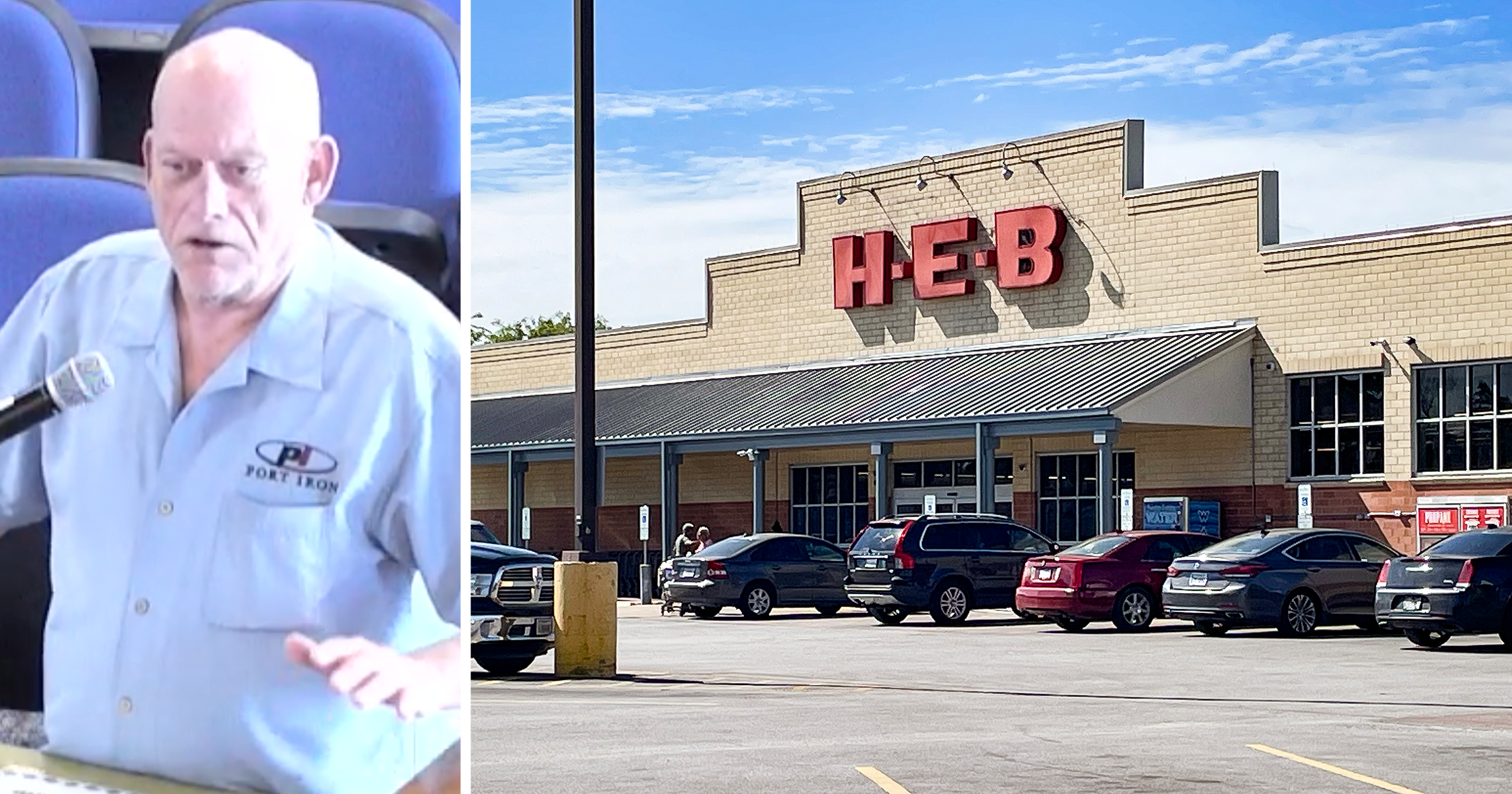
Albright