

After months of discussion and a passionate public plea Aug. 5, the Beaumont City Council ultimately voted to deny an ordinance that would have imposed civil penalties on individuals found to be interfering with child custody orders.
The decision to reject the proposed new ordinance followed a lengthy and detailed discussion involving public comments, questions from council members, and feedback from both Beaumont Police Chief Tim Ocnaschek and Municipal Court Judge Craig Lively, who both advised against adopting the ordinance, citing legal conflicts, enforcement limitations, and the potential burden on municipal resources.
During the public comment portion of the meeting, local resident Daniel Campise urged council members to adopt the ordinance. Citing data from the Texas Department of Public Safety, Campise described custody interference as a widespread, emotionally damaging issue that often goes unpunished due to legal loopholes and lack of enforcement.
“Families remain in turmoil. Repeat offenders continue unchecked. And our city’s youth, caught in the middle, are paying the highest emotional price,” Campise said. He argued that the proposed ordinance would fill enforcement gaps by allowing civil penalties for violators, providing a more accessible route for families seeking relief.
The citizen commenter cited House Bill 969, passed by the Texas Legislature in 2023, which gave municipalities the option to implement civil fines for violations of child custody orders.
“This bill offers a more practical and effective solution — one that avoids the harsher consequences of criminal prosecution while still holding violators accountable,” Campise said.
Despite Campise’s plea, council members expressed concern after hearing in-depth presentations from Ocnaschek and Lively, both of whom pointed to practical and legal barriers to enforcing the ordinance.
Ocnaschek noted that the Beaumont Police Department received approximately 340 custody interference-related calls over the past two years, but few resulted in prosecutions due to the longstanding process dictated by family court judges and the district attorney’s office.
“The enabling statute allows for a civil penalty, but what’s being proposed appears to impose a criminal penalty — which creates a legal conflict,” Ocnaschek explained. “And, our department has no way to verify if the custody orders we’re shown are current or valid.”
Lively echoed the police chief’s concerns, warning that municipal courts are not equipped to enforce family court orders or resolve complex custody disputes.
“Trying these cases in our court would be the equivalent of trying a state jail felony, with the end result being a $500 fine,” he said. “We have no jurisdiction to compel parents to produce children or enforce custody agreements issued in other states.”
Lively also warned of unintended consequences, including potential double jeopardy issues and a lack of judicial authority to resolve the root problems.
“I have no teeth to enforce it whatsoever,” he said. “And, there’s no direct legal path from municipal court to family court.”
Councilman AJ Turner acknowledged Campise’s dedication, saying, “He’s been consistent for almost two years on this particular topic. I just want to thank staff for working with police and researching this.”
Still, as discussion unfolded, many on the dais voiced increasing concern about the ordinance’s impact on municipal courts and law enforcement.
Councilwoman LaDonna Sherwood, herself a custodial parent, said she understood the emotional weight of custody disputes but wasn’t convinced the ordinance would provide real solutions.
“I’m not inclined to believe the risk outweighs the reward,” she said before making a motion to deny the ordinance outright.
Mayor Roy West initially supported tabling the ordinance to allow for further research and discussion with other Texas municipalities, but Sherwood’s motion to deny carried more momentum. Ultimately, the council voted to deny the ordinance altogether.
While the ordinance was rejected, several council members expressed a desire to continue seeking alternative solutions that might better support families struggling with custody violations — particularly those who cannot afford legal representation.
“I want some form of a solution,” Turner said. “Not just something where we’re kind of stuck in the middle.”
City Attorney Sharae Reed, who helped draft the ordinance at the request of the mayor, reiterated that most Texas cities have not adopted HB 969 due to its legal gray areas and the strain it places on municipal court systems.
As of now, interference with child custody remains a felony-level criminal offense in Texas, handled primarily through family courts and district attorneys. Civil penalties, while authorized under HB 969, appear unlikely to be implemented in Beaumont in the foreseeable future.
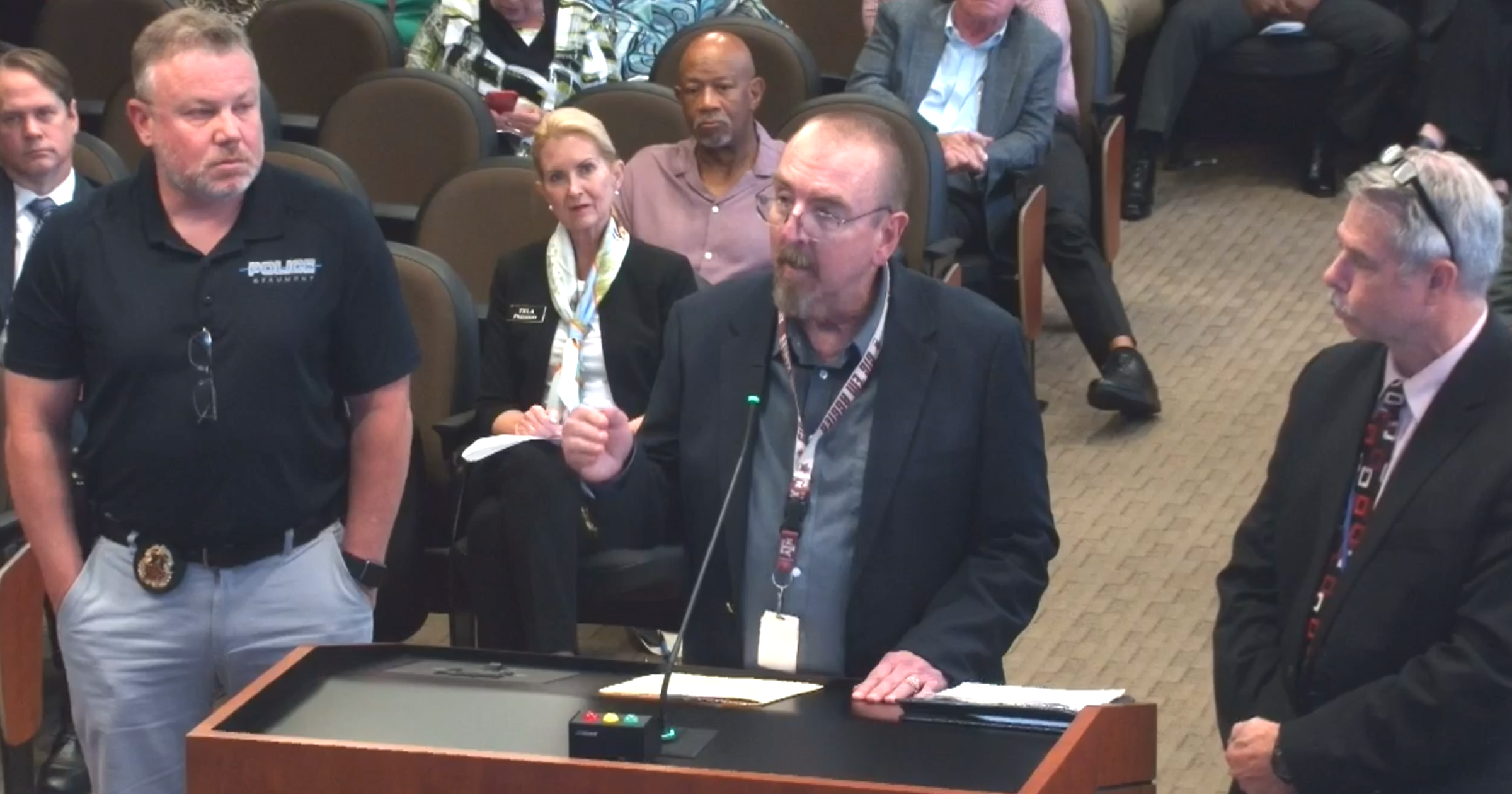
Municipal Court Judge Craig Lively speaks to Beaumont City Council alongside Beaumont PD Assistant Chief of Police Jason Plunkett (left) and Chief of Police Tim Ocnaschek.