

On air and off-the-cuff
Thursday, March 12, longtime Beaumont radio personality Al Caldwell will celebrate a milestone few people — in radio or in life — ever reach. Caldwell is turning 90 years old, a birthday that marks nearly seven decades behind the microphone and more than six decades as one of Southeast Texas’ most recognizable voices.
“I guess everybody says it — if I thought I was gonna live this long, I’d taken better care of myself,” Caldwell said with a laugh.
The longtime broadcaster still works three mornings a week, continuing a routine that has defined much of his life since he first stepped into a radio studio in 1956. For Caldwell, radio was never just a career. It became the rhythm of his life.
Caldwell credits both family longevity and lifestyle changes for helping him reach this latest milestone.
“I haven’t always been faithful to working out,” he admitted. “But, for most of my life, I’ve worked out or jogged and used to be a runner until I was about 38. I’m of Italian heritage on my mother’s side, so a lot of pasta,” he laughed.
A turning point came in April 1990 when Caldwell suffered a heart attack.
“Ever since my heart attack in April of 1990, I have taken better care of myself,” he shared, but admitted the past year brought its own challenges. Caldwell spent time in and out of the hospital in November and December of 2025. “I really didn’t think I was ever gonna be back to work. But, the guys kept saying on the air I was going to be back.”
Longtime coworkers spurred him on, encouraging a return to radio. After consulting with his wife, Annette, Caldwell re-entered the studio — but on a reduced schedule.
“Annette is one of the main reasons I’m still here,” Caldwell gushed over the missus. “She’s taken very good care of me.”
The couple has been married 34 years, though their relationship dates back to 1987.
“She actually saw me before I saw her,” Caldwell joked. “When she found out I was on the radio she fell in love with me…”
Caldwell tried a second time to get the first encounter more accurate: “Actually, we met at a bowling alley and she said to her friend, ‘Is that who I think it is — Al Caldwell? I’ve got to meet him.’”
Annette quickly chimed in with a laugh: “That’s not exactly how that went.”
The specifics of the Caldwells’ beginning aside, both agree that the nearly 40 years since have been blessed – and filled with a dedication to each other, as well as Al’s service to Southeast Texas.
Now, Caldwell works Tuesday through Thursday mornings at KLVI AM 560. Before his health issues, he worked on-air Monday through Friday from 6-9 a.m., a schedule that began long before sunrise.
“I used to get up around 2 a.m. and research news before getting ready for work at 4:30,” he said. “Now I get up at 3:45 and get there around 5:30. I just don’t put in the time that I used to, and it makes it a lot easier on me.”
These days, Caldwell’s morning show is followed by a workout and a well-earned afternoon nap.
“I come home and work out and get a big ol’ nap every afternoon,” he beamed, the smile of a man accustomed to routine siestas.
A rock’n’roll dream come true
Long before Caldwell became a familiar radio voice, he was chasing a different dream.
“I was a rock ‘n’ roll musician before I was in radio,” he shared of life long past but still in his heart. “That’s what I really wanted to be.”
After graduating high school, Caldwell briefly worked at a bank in Dallas.
“I worked at the bank a couple months after high school,” he said of a brief stint halted so Caldwell could put together a band and spend years performing across the country. “Broke my mother’s heart when I quit the bank and went on the road as a musician.
“We had eight or more different names. I would change them every couple of weeks. We’d get fired from one job, change the name and be back.”
One of the groups he played with the longest was The Original Esquires, performing from 1954 through 1961. Caldwell served as the piano player, lead singer and front man. The band even played in Las Vegas.
Fate intervened in 1956, when Caldwell met Texas-based musician, comedian and promoter Clyde Barefoot Chesser.
Chesser heard Caldwell perform in Livingston and sparked a conversation that would change Caldwell’s life.
“I just kind of really worked his mind until I found out what I could do to get a job in radio,” Caldwell recalled. “He told me there was an opening in Baytown. That’s where I went. That was my first job in radio.”
For a time, Caldwell lived between two worlds — performing at night and working as a radio disc jockey during the day: “I’d get fired from the radio station and we’d go back on the road.”
Eventually the pattern ended in 1961 when Caldwell landed a full-time radio job in Los Angeles and stepped away from touring.
When Caldwell began his broadcasting career in the 1950s, radio was a very different industry.
“In those days it was all music radio and you were paid to shut up and play the music,” he said. Over time, he added, a new style began to emerge. “Personality radio started when guys who were smart enough could do statements over the tops of songs — during the non-lyrical music they could squeeze in announcements, weather forecasts, remarks about the song and such.”
Caldwell knew exactly which direction he wanted to take.
“I didn’t want to become what they call a time-and-temperature man,” he said, an ambitious stance that came with consequences.
“I got fired from a few radio stations,” he said with a grin. Caldwell’s habit of changing formats and experimenting with programming often clashed with management. “I’d change the format, alter things, and that was the end of many jobs.
“As a matter of fact, I got fired from every radio station I ever worked for before I came here to Beaumont.”
Home, home on the Beaumont range
Caldwell’s life changed dramatically in 1963.
“On my birthday, March 12, 1963, I started at KAYC in Beaumont,” Caldwell said.
It was the beginning of a career that would define local broadcasting. Caldwell remained at KAYC until March 17, 1977, before moving to KLVI Radio, where he has spent the past 49 years. In total, Caldwell has worked 63 continuous years in the Beaumont market.
At KLVI, Caldwell was hired to develop a new approach to country radio. There, he would lead “a new kind of country radio, modern country with a Top 40 format” as the operations manager. The biggest gamble of his career came in 1990. At the time FM stations were becoming dominant while AM radio struggled.
“Everybody said AM radio was dying,” Caldwell said. So, Jan. 4, 1990, the radio star made a bold move. “I changed the format to talk radio, and everybody thought we were crazy. They said we’d be off the air in 90 days.”
Instead, the station flourished.
“It’s been a very successful format and a successful change for us.”
For Caldwell, success is measured in the minds of listeners. In his recitation of “making it” in the business, the most rewarding part of radio was never the paycheck.
“The biggest thing for me is definitely not the money — it was the people I got to meet and interview,” he shared, listing a brief snippet of stories shared with local listeners during his career.
Over the years, Caldwell interviewed some of the biggest names in entertainment, sports and politics. Among the long list of interviewees are former president Bill Clinton, legendary sportscaster Howard Cosell, basketball icon Jerry West, and Los Angeles Dodgers manager Tommy Lasorda. He also interviewed U.S. Senator Ted Cruz early in Cruz’s career.
“I gave Ted Cruz his very first interview here in Beaumont,” Caldwell recalled. “Nobody showed up except me and my tape recorder.”
Many music legends passed through Caldwell’s studio, including Les Paul, Chuck Berry, Fats Domino, Little Richard, Mickey Gilley, Kid Rock, and comedian and humanitarian Jerry Lewis, whom Caldwell calls a close friend.
“I was just glad to have the opportunity to interview and talk to a lot of great musicians,” Caldwell said, humbly reminiscing on his time behind the mic. “Some are meaningless in today’s society but, at the time, they were everything.”
One of Caldwell’s most memorable stories involves Texas rock legends ZZ Top. Before they became famous, guitarist Billy Gibbons played in a group called The Moving Sidewalks.
“I gave ZZ Top their start right here in Beaumont,” Caldwell said.
When their manager called about a new band, Caldwell was skeptical after the mention of The Moving Sidewalks: “I said I don’t want anything to do with that.”
But, Caldwell agreed to give the rockers a chance. The first ZZ Top show, held at the Knights of Columbus Hall, drew only a dozen people.
“The bass man forgot his bass and had to borrow one,” Caldwell said. The following weekend, however, the band returned for another show at the Towne House in Groves. “This time there were almost 900 people. They were that great.”
It became the band’s first paid performance in 1970.
A lifetime of broadcasting
With decades of service to his credit, Caldwell’s resume grew far beyond radio. He spent a decade as sports director for the local ABC television affiliate and worked 35 years as a color commentator for Lamar University football and basketball. The university contribution earned him induction into the Lamar Cardinal Hall of Honor.
Caldwell also served as master of ceremonies for the Jerry Lewis MDA Labor Day Telethon in Beaumont for 13 years.
Caldwell is a member of the Texas Radio Hall of Fame and a two-time winner of the prestigious Marconi Award, radio’s highest honor.
“I’ve got two of those,” Caldwell said proudly, gesturing toward the awards displayed near the piano he still plays daily.
Perhaps even more precious are the people Caldwell has picked up as treasured confidantes. Today, Caldwell’s radio colleagues have become something like family.
“When I get there in the morning, I’m there with three of my best buddies — Jim Love, Greg Bostwick, and Harold Mann,” Caldwell acknowledged, adding that the friendships span decades. “Jim, Harold, and I have been together over 35 years, and Greg and I have been bantering and doing weather together for almost 50 years.”
Recently, Caldwell came to a special realization: “These guys are the replacement of my band members, as silly as that may sound. Only we’re not playing music anymore — we’re playing talk. This is my band nowadays.”
When Caldwell walks into the studio each morning, he said, the feeling is the same as it was when he walked onto a stage with fellow musicians decades ago.
“It still feels like I’m just going to play with my friends,” Caldwell expressed of a group that makes the 90-year-old still fell like a young man.
Outside the studio, Caldwell enjoys a quieter life. He and Annette recently sold their home in Wildwood and spend much of their time exercising, including swimming in their backyard pool. The couple also enjoys traveling.
“During our marriage I took her everywhere — England, France, Austria, Germany, Italy, Costa Rica, Mexico, Canada, Hawaii three times,” Caldwell said. “We’ve had a really good relationship and a good time together. No complaints here.”
One of his favorite simple pleasures is riding the train from Beaumont to New Orleans.
Caldwell’s family continues to grow, as well. He has three adult children, eight grandchildren and seven great-grandchildren, including one on the way.
Despite the accolades and longevity, Caldwell remains humble about his place in broadcasting history.
“I know nobody in this market in radio or TV will ever have 63 years of continuous experience,” he said. “In my own little world, I guess that’s kind of a self-pat once in a while. I know it’s not a big deal — but it is to me.”
Caldwell is reminded of a lyric from country singer Roger Miller’s song “Kansas City Star.”
“Kansas City star, that’s what I are,” Caldwell quoted with a smile. “Outside of Beaumont, Texas, I doubt if anybody knows I’m still alive and have been on the air forever — or even cares about it.”
Caldwell once planned to retire at 65.
“I fully intended to retire like most people did,” he said. “Then I looked around and said, ‘Wait a minute — you don’t have enough money to retire.’”
He stayed. Then came 70, then 75, then 80. A heart bypass in 2016 changed his outlook.
“My body changed and my thinking changed,” he said. “I knew I’d never have that same dynamic I had.”
But the microphone kept calling him back. When asked if the job still feels like work after nearly 70 years, Caldwell didn’t hesitate.
“Hell no,” he said. “It’s not work. It’s fun.”
And as long as he can still walk through the studio doors each morning, Caldwell said, he plans to keep doing what he has done most of his life:
“It’s been a great ride.”

Al Caldwell (1980)
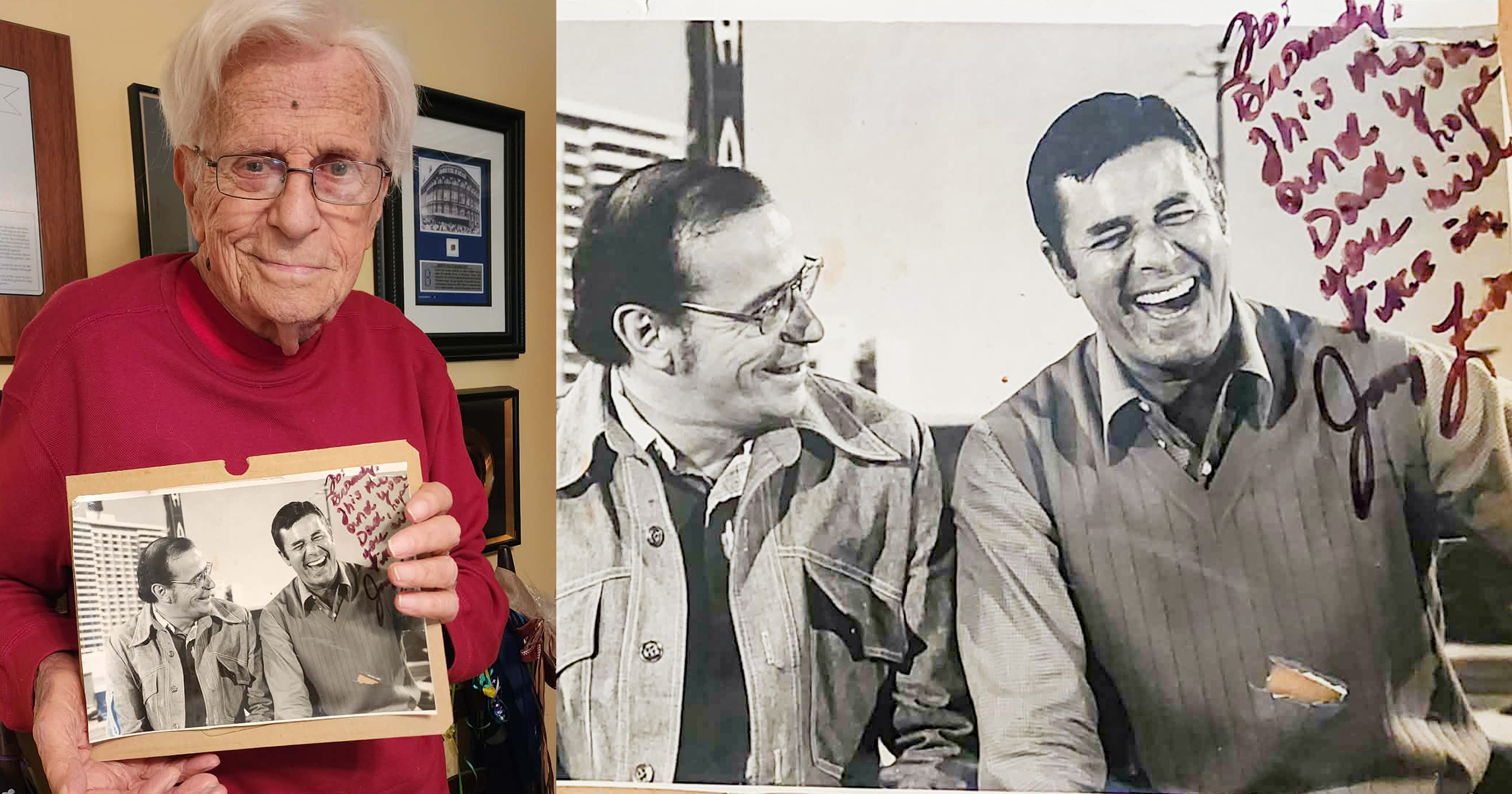
Al Caldwell and Jerry Lewis
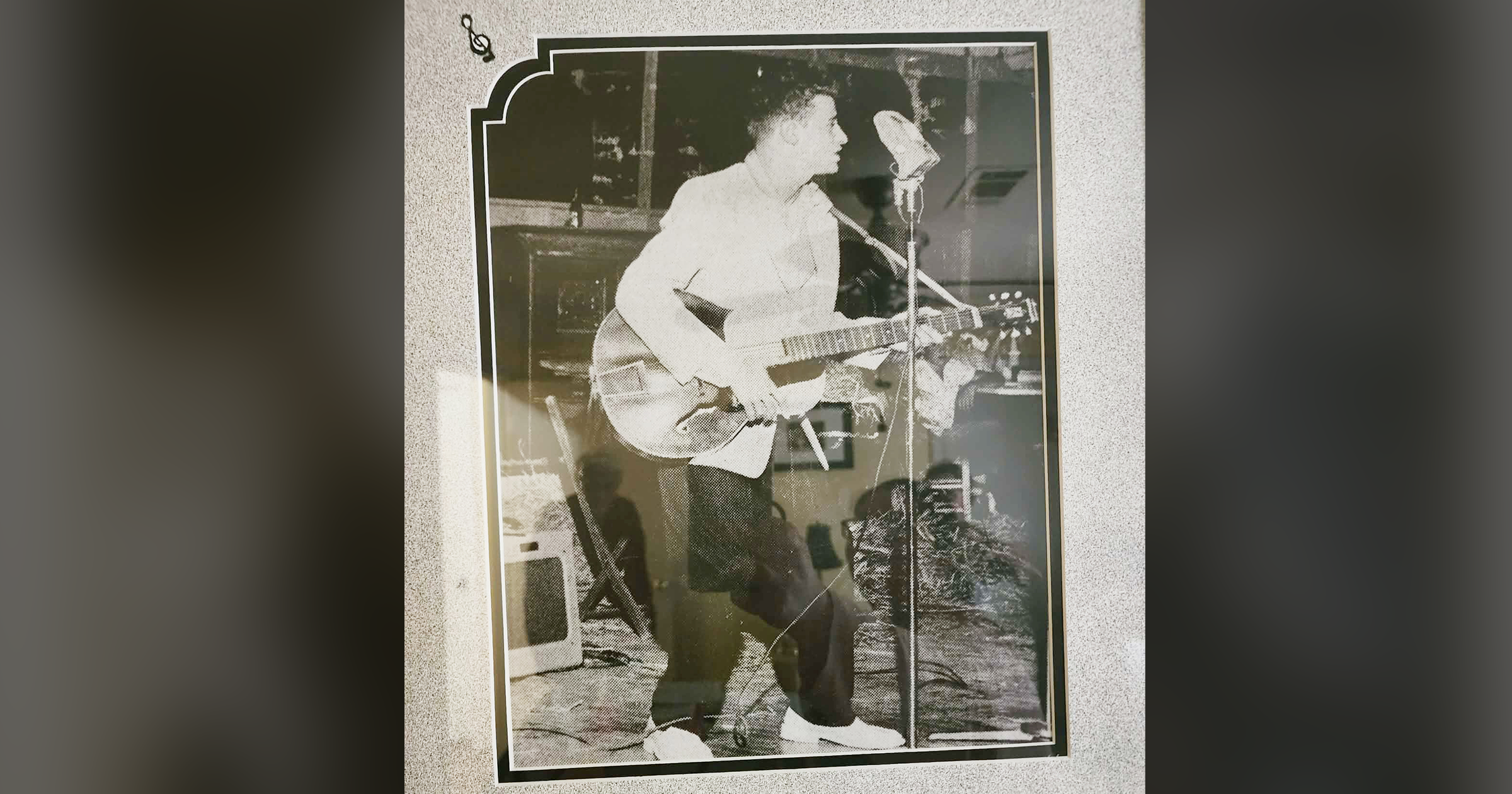
Al Caldwell in his rock ‘n’ roll days