

A true master of guitar, violin, mandolin, viola, harmonica, piano, and drums, Clarence “Gatemouth” Brown refused to be boxed into a blues-only label and called his own sound “American music, Texas style,” blending blues, country, jazz, Cajun, and swing, just to name a few.
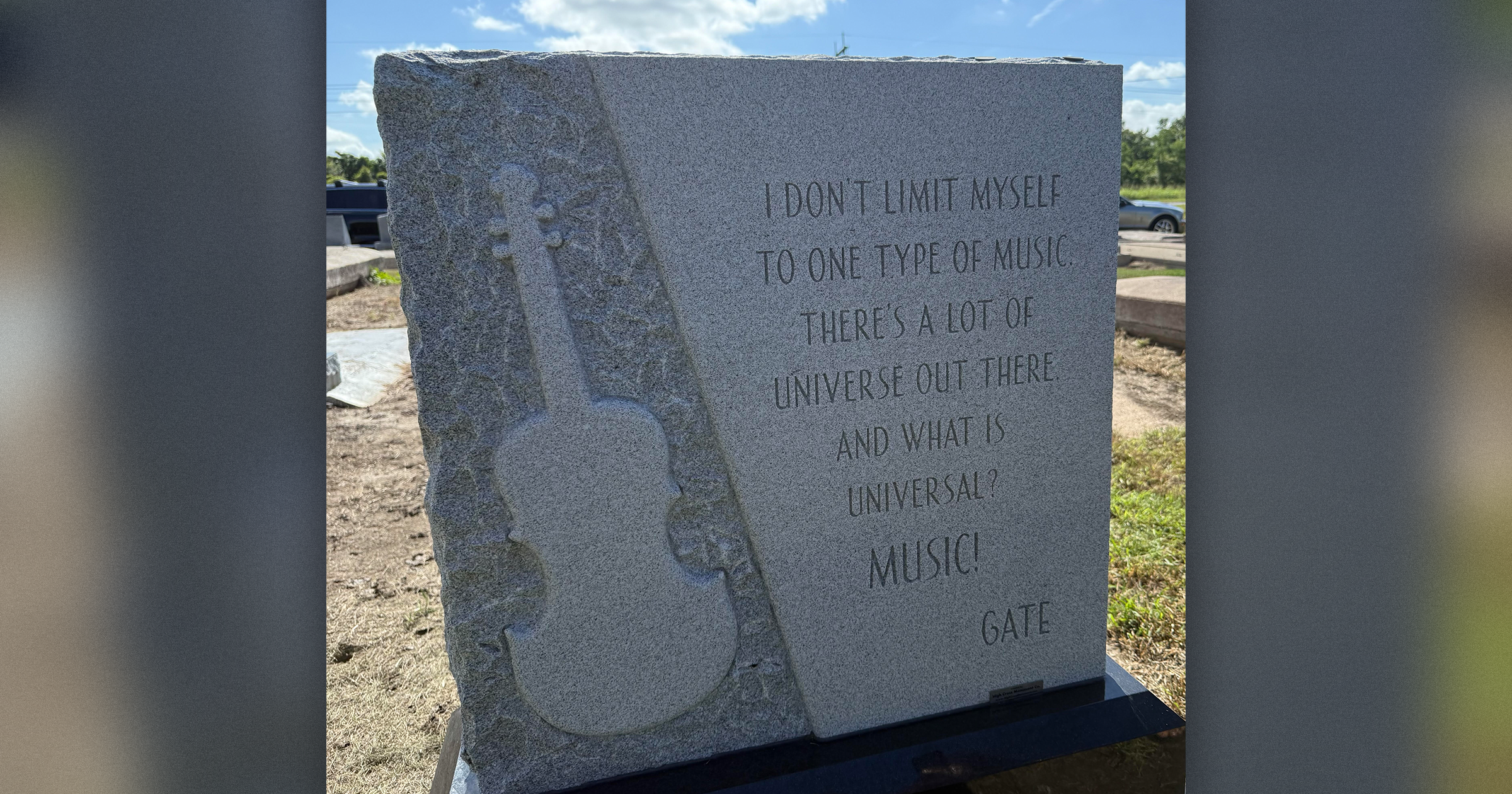
After being damaged by previous storms, a new gravemarker for the former Orange citizen and famous musician was unveiled July 23 at the Hollywood Cemetery in Orange.
Stephan ‘doc’ Watson, a long-time friend of Brown, said the original “artistic and delicate” marker was damaged twice over two different floods.
“It was beautiful, very elaborate,” he said. “It was a work of art. It was two pieces cut out in the middle with the silhouette of his guitar.”
The original headstone was severely damaged by Hurricane Ike, which was repaired by volunteers. But after Hurricane Harvey, it was washed beyond repair, which brought Watson to create a fundraiser for a more permanent and sturdier marker.
“It was about a two-year process,” he remembered. “Gatemouth has been my lifelong friend, and because the business was unable to package and market him as one particular kind. He was (just) a country player, or a blues player, or a jazz player, but he played all of those things. He never really got the recognition that I felt that he deserved. He was my friend, and I just wanted to not let him be forgotten.”
Watson said the people who worked to repair the original gravemarker contributed to the fundraiser, only with people from all over the U.S.
Brown was born in Vinton, Louisiana on April 18, 1924 and was raised in Orange. He was best known for his blues songs, winning a Grammy Award for Best Traditional Blues Album in 1983 for his album, “Alright Again,” but was also known for his country, jazz and rock and roll sounds.
His career began in 1945, when he played the drums in San Antonio and it fully took off after he attended a concert by T-Bone Waker in Don Robey’s Bronze Peacock Houston nightclub in 1947. When Walker became ill, Brown took the stage, where he quickly wrote and performed “Gatemouth Boogie.”
In 1949, Robey founded Peacock Records and signed Brown, where his songs “Mary is Fine” and “My Time Is Expensive” became hits. Other notable songs from Brown include the 1954 instrumental tune “Okie Dokie Stomp,” where he solos continuously over a punchy horn section.
Brown moved to Nashville, Tennessee and recorded several country singles. He also made appearances in shows such as “Hee Haw,” and “The !!!! Beat.” By the early 1970s, he had toured Europe 12 times and became an ambassador for American music. He also appeared in the 1973 Montreux Jazz Festival, alongside American blues band “Canned Heat.”
Gatemouth was able to perform a concert tour of the Soviet Union 1979, which lasted six weeks. At the time, all U.S. tours were conducted through the U.S. State Department, which was the first time the Soviet Union made a contract with a U.S. private citizen regarding musical tours.
By the 1980s, Brown toured through the U.S., playing 250-300 shows a year. Along with his 1982 Grammy, he was nominated for five more and won eight W.C. Handy Awards. In 1999, Brown was inducted into the Blues Hall of Fame and sat in as a guest with the Saturday Night Live Band in 2000.
His music inspired countless guitarists and musicians – from Frank Zappa to Albert Collins, Johnny Watson, and Eric Clapton.
On August 29, 2005, his home in Slidell, Louisiana, was destroyed by Hurricane Katriana, and he was evacuated to Orange.
Diagnosed with lung cancer in 2004, Brown also battled heart disease and emphysema. He died in Orange September 10, 2005, at the apartment of a grandniece. He was 81 years old.
“Gatemouth was one of the greatest musicians in U.S. history,” Watson said. “We expect this marker to last 100 years.”
Brown’s marker can be viewed at the Hollywood Cemetery, located at the 1500 block of Simmons Drive between West Turret Avenue and West Curtis Avenue.
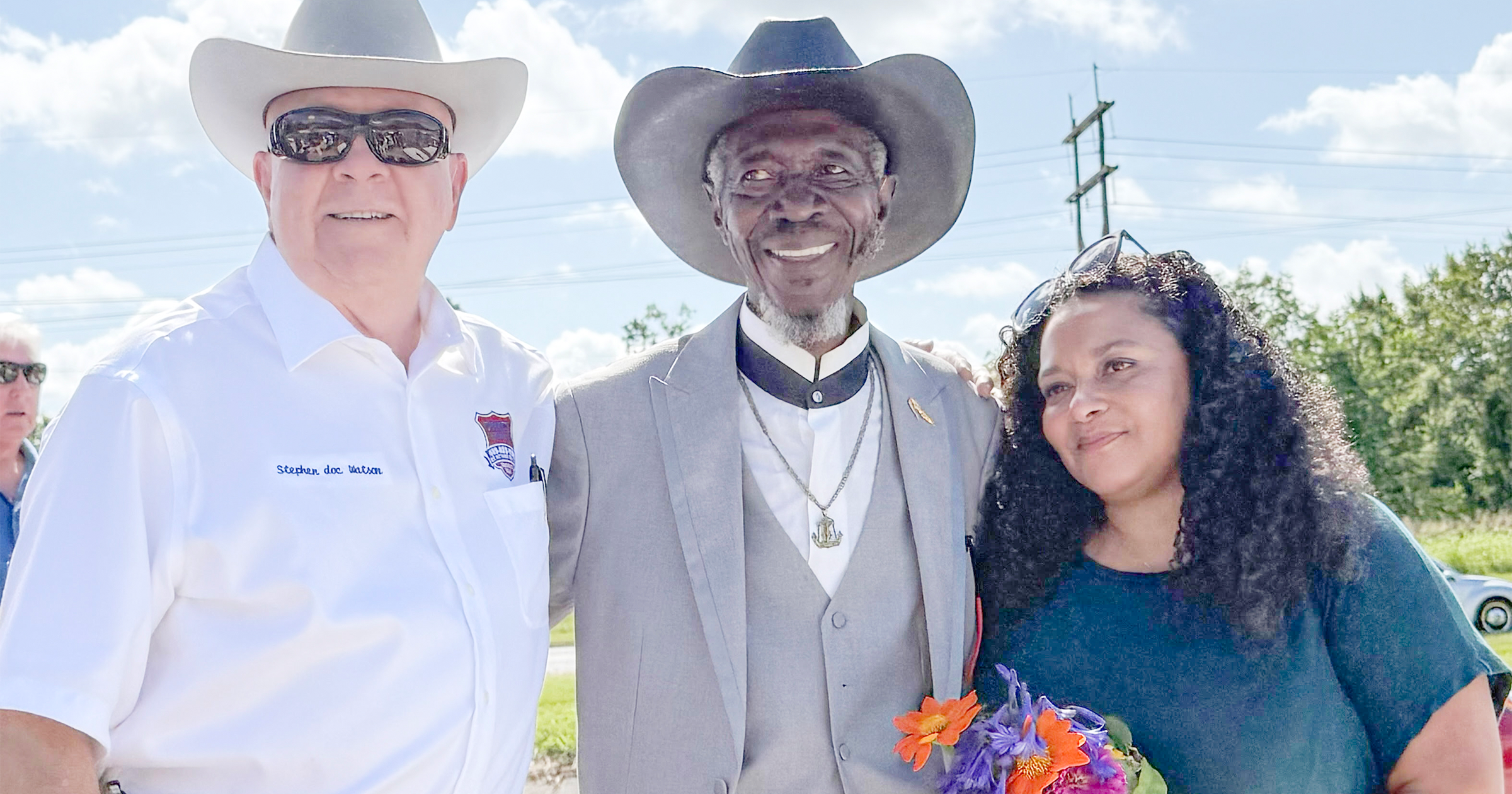
Stephen ‘doc’ Watson, Bobby Brown and Renee Brown
.